In brief
- A multinational team reports the largest real-world cohort so far of patients with advanced HER2-mutant non-small cell lung cancer treated with trastuzumab deruxtecan (T-DXd) outside clinical trials: 168 patients across 68 centres in Europe and Israel.
- The objective response rate was 54.8% and disease control rate 88.7%, with a median progression-free survival of 7.2 months and a median overall survival of 18.3 months. Treatment-naive patients responded more often (72.2%).
- Among the 27 patients with measurable brain metastases, the intracranial response rate was 74.1%, a group largely excluded from the earlier registration trials.
- Interstitial lung disease or pneumonitis occurred in 14% of patients, including four fatal cases, and the authors describe it as the main safety concern.
Background
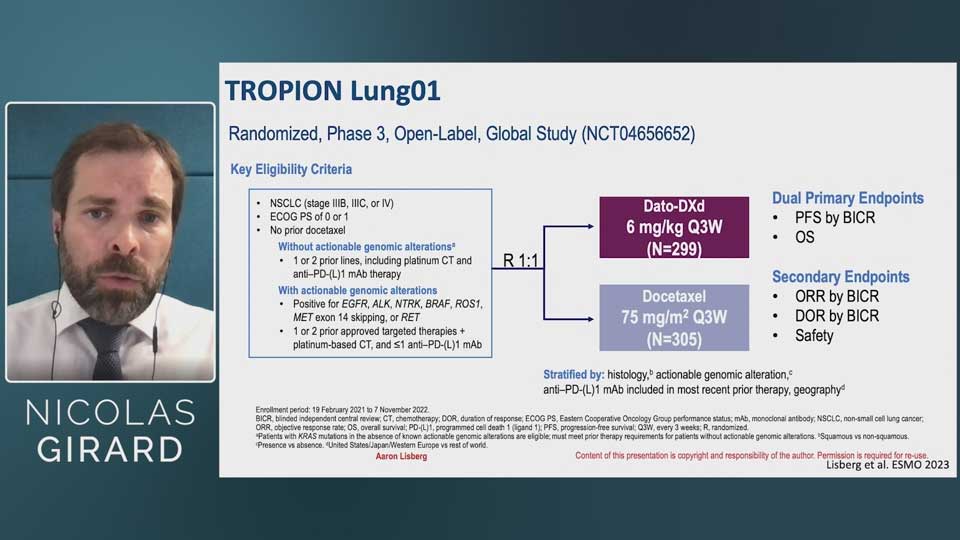
HER2 mutations are found in a small share of non-small cell lung cancers and define a distinct subset that is now treatable with drugs aimed at the alteration. Trastuzumab deruxtecan, an antibody-drug conjugate that links a HER2-directed antibody to a chemotherapy payload, showed strong activity in the DESTINY-Lung studies and entered practice on that basis. The authors note that data from everyday use, where patients are older, sicker and more varied than those enrolled in trials, had been limited.
To close that gap, the investigators assembled a retrospective cohort under the TRACER/HERTras collaboration, pooling records from patients treated between August 2021 and January 2025. Their aim was to test whether the efficacy and safety recorded in the registration programme carried over to unselected patients, and to look specifically at two groups that trials tend to leave out: those treated in the first line and those with active brain metastases.
Study at a glance
- Cohort: TRACER/HERTras real-world cohort (retrospective, multinational)
- Population: 168 patients with advanced HER2-mutant NSCLC treated outside trials; 68 centres across Europe and Israel; August 2021 to January 2025
- Treatment: trastuzumab deruxtecan (T-DXd), across treatment lines
- Primary endpoint: objective response rate, 54.8% (95% CI 46.9 to 62.4)
- Survival: median PFS 7.2 months; median OS 18.3 months
- First line (n=18): response rate 72.2%; median OS 22.1 months
- Brain metastases (n=27): intracranial response rate 74.1%, including 25.9% complete responses
- Safety: grade 3 or higher treatment-related events in 32%; interstitial lung disease or pneumonitis in 14% (four fatal)
What the cohort showed
Across the 168 patients, whose median age was 62 years and of whom 56% had never smoked, the objective response rate was 54.8% and the disease control rate 88.7%. Median progression-free survival was 7.2 months and median overall survival 18.3 months. The authors report that these figures sit close to those recorded in the DESTINY-Lung02 trial, which they take as evidence that the drug performs in routine practice much as it did under trial conditions.
The 18 patients who received trastuzumab deruxtecan as their first treatment did notably better, with a response rate of 72.2% and a median overall survival of 22.1 months. The authors are careful about the number, since first-line use was uncommon in the cohort and the group is small, but they note that it adds to the case for testing the drug earlier in the disease course, which is the question several ongoing trials are designed to answer.
Activity against brain metastases
Brain metastases are common in HER2-mutant lung cancer and were an explicit focus of the analysis. Among the 27 patients with measurable intracranial disease, the response rate inside the brain was 74.1%, and about a quarter of that group had a complete intracranial response. Because patients with active brain metastases were largely kept out of the registration trials, the authors present this as one of the cohort’s more useful contributions, offering a read on a question clinicians face regularly but had little trial data to answer.
“In the largest real-world cohort reported to date, T-DXd demonstrated robust systemic and intracranial activity in HER2-mutant NSCLC, including treatment-naive patients and those with active brain metastases who were largely excluded from prior studies.”Illini et al., Journal of Thoracic Oncology (2026)
Safety
Treatment-related adverse events of grade 3 or higher occurred in 32% of patients, which the authors describe as consistent with previous reports. The signal they single out is interstitial lung disease or pneumonitis, a known risk with this drug, which affected 14% of the cohort and was fatal in four cases. They found no consistent predictor of who would develop it, and frame it as the principal safety concern to weigh when using the drug, particularly given that the real-world population is broader than the trial population.
What the authors conclude
The investigators conclude that trastuzumab deruxtecan showed robust systemic and intracranial activity in this unselected population, and that its performance supports building HER2-directed treatment into the way HER2-mutant lung cancer is managed. They temper that with the retrospective design, the modest numbers in the first-line and brain-metastasis subgroups, and the continuing need to watch for lung toxicity.
Sources
- Journal of Thoracic Oncology. Trastuzumab deruxtecan in HER2-mutant NSCLC: evidence from the largest real-world cohort to date (2026-02-24). doi.org
Featuring Lung Summit faculty
This study was co-authored by Lung Summit faculty Maximilian Hochmair, Giannis Mountzios, Alfredo Addeo and Martin Reck.
This article was produced independently by the Lung Summit editorial team, without industry funding or input.