In brief
- Antibody-drug conjugates have become part of standard treatment across several solid tumours, so the open questions now are less about whether they work and more about how best to use them.
- The group argues that research priorities should be set separately for each tumour type, starting with the settings where an antibody-drug conjugate could take the place of chemotherapy.
- It calls for more caution before a drug jumps from early-phase studies into large phase III trials, with prespecified evidence thresholds met first.
- Validating predictive biomarkers, potentially with help from artificial intelligence, is flagged as the field’s next major task.
What the workshop set out to do
The European Thoracic Oncology Platform and the International Breast Cancer Study Group established the ETOP IBCSG Partners Foundation workshops as a recurring forum to review the evidence on antibody-drug conjugates and to offer recommendations for future research. This paper reports the third meeting in that series. The authors describe a deliberately cross-disciplinary group, spanning several tumour types alongside basic and translational scientists and pharmaceutical industry representatives, assembled so that lessons learned in one cancer can inform work in others.
That cross-tumour framing runs through the whole statement. Because an antibody-drug conjugate couples an antibody to a cytotoxic payload, experience with a given target or payload in one disease often carries over to another, and the authors treat the field as a single body of knowledge rather than a set of separate stories in lung, breast or bladder cancer.
Where antibody-drug conjugates now stand
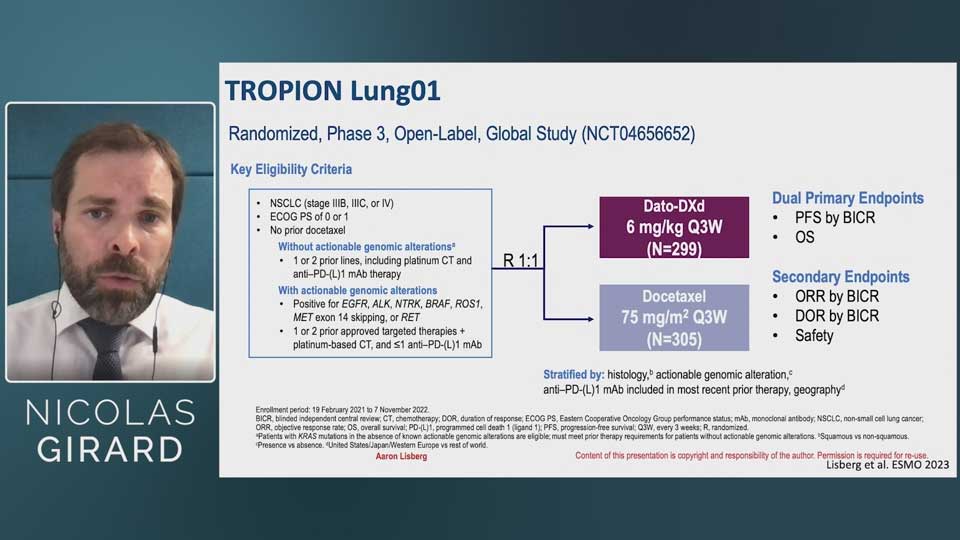
The position statement notes that recent positive phase III results have written several antibody-drug conjugates into standard care across a range of cancers. In lung cancer the authors cite sacituzumab tirumotecan; in breast cancer, trastuzumab deruxtecan, sacituzumab govitecan and datopotamab deruxtecan; in muscle-invasive bladder cancer, enfortumab vedotin; in ovarian cancer, mirvetuximab soravtansine; and in cervical cancer, tisotumab vedotin. It is a broad footprint for a class of drugs that only recently was confined to later lines of treatment.
Because the drugs have advanced at different rates in different diseases, the group argues that research priorities have to be set tumour by tumour rather than for the class as a whole. The first place to look, in their view, is the set of situations where an antibody-drug conjugate could replace chemotherapy outright, since that is where the potential gain for patients is largest and the comparison with existing treatment is clearest.
A note of caution on trial design
The authors also question how quickly some of these drugs have moved into large trials. Many phase III studies, they observe, have been launched on the strength of positive phase I data. While the resulting trials are larger than those run historically, the group recommends that prespecified thresholds, such as the number of patients treated and the magnitude of efficacy seen in the earlier study, should be met before a programme proceeds directly to phase III. The aim is to avoid committing large numbers of patients to expensive confirmatory trials on evidence that has not yet cleared an agreed bar.
Biomarkers as the next priority
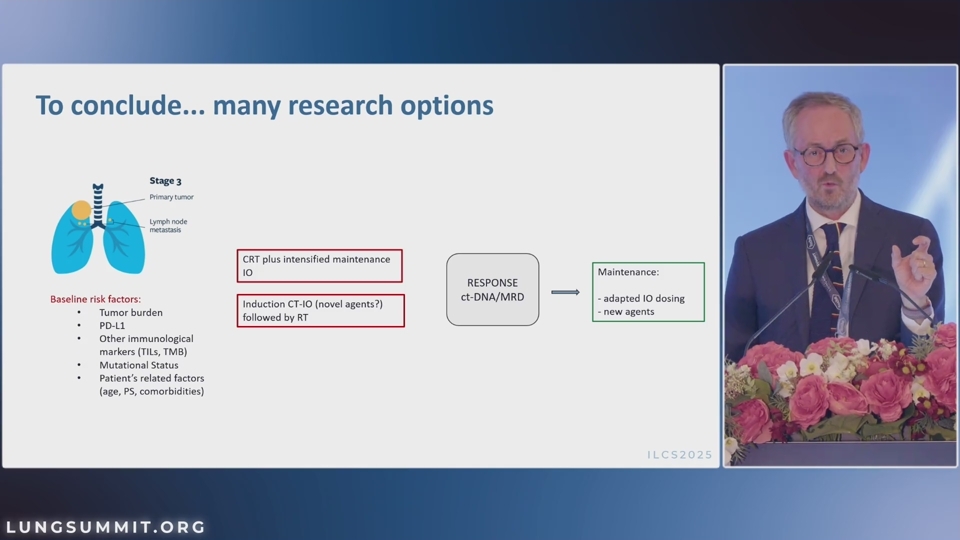
Much of the statement turns on biomarkers. The authors acknowledge that several antibody-drug conjugates have been developed successfully without a mandatory biomarker for patient selection, but they argue that a biomarker-driven approach lets treatment be directed more rationally.
“Importantly, although several ADCs have been successfully developed without mandatory biomarker selection, biomarker-driven ADC development enables rational patient selection, as illustrated by multiple ADCs (e.g. T-DXd, mirvetuximab soravtansine and telisotuzumab vedotin).”Peters et al., ESMO Open (2026)
Developing and validating such predictive biomarkers will not be straightforward, the authors caution. They point to several complications that can affect a biomarker reading, including the algorithm used to score it and the type of specimen analysed, both of which may be distorted by differences in a tumour over time and between sites. Alongside this, the group lists two further continuing priorities: optimising the conjugates themselves, to improve the balance between efficacy and tolerability, and the search for reliable molecular targets that mark out the patients most likely to benefit.
Bringing artificial intelligence to bear
Given the volume of data now being generated on these drugs, the authors suggest that artificial intelligence could be used to analyse combined datasets and to build composite biomarkers, drawing together tumour histology, target expression thresholds, molecular alterations and the pathways that affect how a drug’s payload behaves. Used in that way, they propose, such analysis could help turn the workshop’s research agenda into a set of testable questions rather than a wish list.
Sources
- ESMO Open. Antibody-drug conjugates across solid tumours: an ETOP/IBCSG expert group sets the research priorities (2026-07-10). esmoopen.com
Featuring Lung Summit faculty
This study was co-authored by Lung Summit faculty Rolf A. Stahel, Solange Peters, Giannis Mountzios, Antonio Passaro, Noemí Reguart and Jordi Remon.
This article was produced independently by the Lung Summit editorial team, without industry funding or input.