SELECT FROM MENU

Therapy Areas
Drug Classes

       Therapy Areas

All Sessions

All Sessions

Resectable NSCLC

Resectable NSCLC

Advanced NSCLC

Advanced NSCLC

SCLC

SCLC

Biomarkers

Biomarkers

       Drug Classes

Targeted Therapies

Targeted Therapies

Immunotherapies

Immunotherapies

ADCs

ADCs

ImmunotherapiesNovember 16, 2026

Lenvatinib plus pembrolizumab gave a median PFS of 22.1 months in pretreated thymic carcinoma and B3 thymoma

Lenvatinib combined with pembrolizumab produced a median PFS of 22.1 months and a median OS of 40.2 months in patients with advanced B3 thymoma or thymic carcinoma who had progressed after platinum-based chemotherapy, according to the final analysis of the PECATI trial, published by Remón and colleagues in the Journal of Thoracic Oncology.
Share

In brief

  • The final analysis of the single-arm Phase 2 PECATI trial reports a median progression-free survival (PFS) of 22.1 months with lenvatinib plus pembrolizumab in 43 patients with platinum-refractory B3 thymoma or thymic carcinoma.
  • Median overall survival (OS) was 40.2 months after a median follow-up of 24.6 months, and 53.0% of patients were alive at 36 months.
  • The confirmed objective response rate (ORR) was 25.6%, and the median duration of response was not reached.
  • Grade 3 or higher treatment-related adverse events occurred in 44.2% of patients and led to discontinuation in 27.9%.
  • The trial had already met its primary endpoint, a 5-month PFS rate of 88.0%; there is still no standard second-line treatment in this setting.

Study at a glance

  • Trial: PECATI (NCT04710628), single-arm Phase 2
  • Population: 43 patients with metastatic B3 thymoma or thymic carcinoma, progressed after at least one platinum-based chemotherapy, no autoimmune disorders
  • Treatment: lenvatinib 20 mg orally once daily plus pembrolizumab 200 mg intravenously every 3 weeks, for up to 35 cycles
  • Primary endpoint: 5-month PFS rate, 88.0% (met)
  • PFS: median 22.1 months after a median follow-up of 24.6 months
  • Survival: median OS 40.2 months; 36-month OS rate 53.0%
  • Response: confirmed ORR 25.6%; median duration of response not reached
  • Safety: grade 3 or higher treatment-related adverse events in 44.2%; discontinuation for toxicity in 27.9%

A mostly thymic carcinoma population with extensive disease

The 43 patients enrolled had a median age of 57 years, with a range of 33 to 81. Thymic carcinoma accounted for 84% of them, so the results speak mainly to that histology and much less to B3 thymoma. Disease was extensive: 65% had Masaoka-Koga stage IVB tumours and 51.2% had three or more metastatic sites.

Almost half the cohort, 44.2%, had received two or more prior lines of therapy for advanced disease. Patients with autoimmune disorders were excluded, so the results do not apply to patients with thymic tumours who also have an autoimmune condition.

Median PFS of 22 months after platinum failure

The trial had already reported meeting its primary endpoint, with 88.0% of patients free of progression at 5 months. With a median follow-up of 24.6 months, the final analysis puts the median PFS at 22.1 months.

Median OS reached 40.2 months, although the upper bound of its confidence interval could not be estimated, and 53.0% of patients were alive at 36 months. All of these figures come from one arm without a comparator, in a rare cancer with no agreed standard second-line regimen against which they could be judged.

A response rate of about one in four, median duration not yet reached

The confirmed ORR was 25.6%. The median duration of response had not been reached at the final analysis, after a median follow-up of 24.6 months. The abstract does not report the disease control rate, so the share of patients whose disease was stabilised without shrinking cannot be read from it.

“The final results of PECATI trial supports the combination lenvatinib plus pembrolizumab as a potential treatment option in pre-treated advanced B3-thymoma and thymic carcinoma.”Remón et al., Journal of Thoracic Oncology (2026)

Treatment-related toxicity of grade 3 or higher in 44% of patients

Grade 3 or higher treatment-related adverse events occurred in 44.2% of patients and led to discontinuation in 27.9%. Grade 3 immune-related adverse events were recorded in 11.6%. Two grade 5 events (4.7%) occurred, and both were judged not to be related to treatment.

The authors describe the toxicity profile as manageable but advise close monitoring. More than a quarter of patients stopping treatment for toxicity is a substantial rate for a regimen intended to be given for up to 35 cycles. The abstract does not break the treatment-related events down by type, and it does not say how often the lenvatinib dose was reduced or interrupted.

Sources

  1. Journal of Thoracic Oncology. Final Analysis From PECATI Phase 2 Trial: Lenvatinib in Combination With Pembrolizumab in Pretreated Advanced B3 Thymoma and Thymic Carcinoma (2026-11-01). doi.org

Featuring Lung Summit faculty

This study was co-authored by Lung Summit faculty Jordi Remon, Nicolas Girard and Noemí Reguart.

This article was produced independently by the Lung Summit editorial team, without industry funding or input.

i 3 On This Page

Share

       Continue With

Related Topics

Videos
Jacob Sands, Solange Peters and Martin Reck
Dec102026
VIRTUAL ROUNDTABLE
Advanced NSCLCSCLCADCs

2026 Year in Review

Learn more about the event

S. PetersJ. SandsM. Reck
Nov 13 2026
ILCS 2026
Resectable NSCLCImmunotherapies

Latest options in early-stage NSCLC: novel IO approaches for improved outcomes

S. Patel
Prof. Martin Reck
Nov 04 2026
SPONSORED EXPERT TALK
Resectable NSCLCImmunotherapies

MDT-BRIDGE in Resectable and Borderline Resectable NSCLC

Prof. Martin Reck presents and discusses the phase 2 MDT-BRIDGE trial in resectable and borderline resectable non-small cell lung cancer in this on-demand expert talk.

M. Reck
Dr. Jacob Sands
Nov 04 2026
SPONSORED INTERVIEW
SCLCImmunotherapies

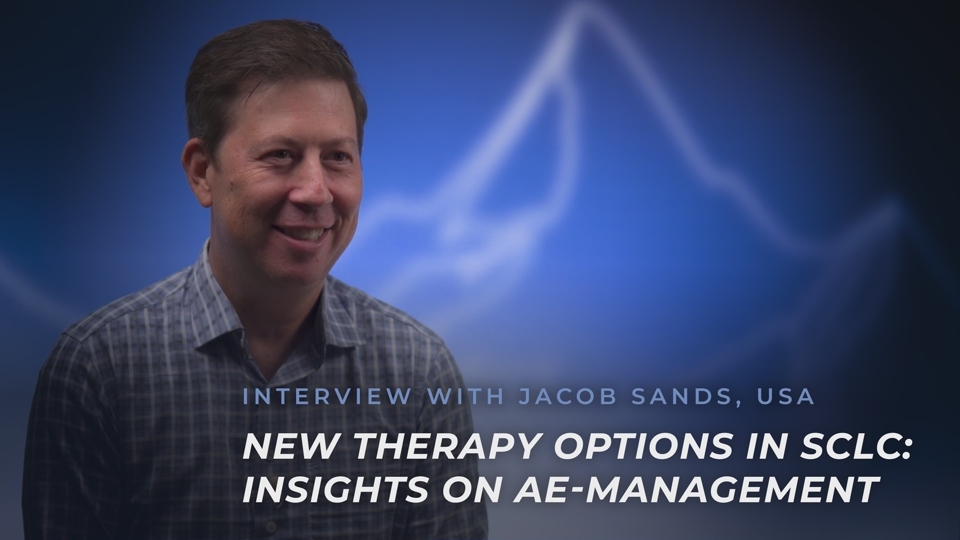
New Therapy Options in SCLC and AE Management

Dr. Jacob Sands discusses new treatment options in small cell lung cancer and the management of their adverse events in this on-demand expert interview.

J. Sands
Oct252026
ESMO 2026 SYMPOSIUM
SCLCImmunotherapies

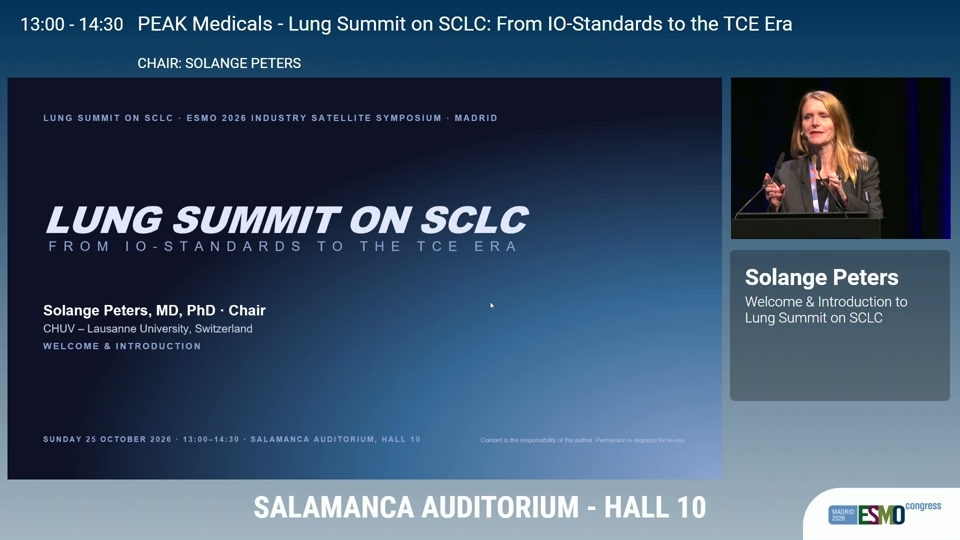
SCLC Symposium at ESMO 2026: From IO-Standards to the TCE Era

A symposium at ESMO Congress 2026 on small-cell lung cancer, from immunotherapy standards to the emerging era of DLL3 T-cell engagers. Recording to follow.

M. ReckS. PetersG. MountziosN. Reguart
Prof. Alessandra Curioni-Fontecedro discussing approaches in metastatic PD-L1 negative NSCLC
May 04 2026
SPONSORED INTERVIEW
Advanced NSCLCImmunotherapies

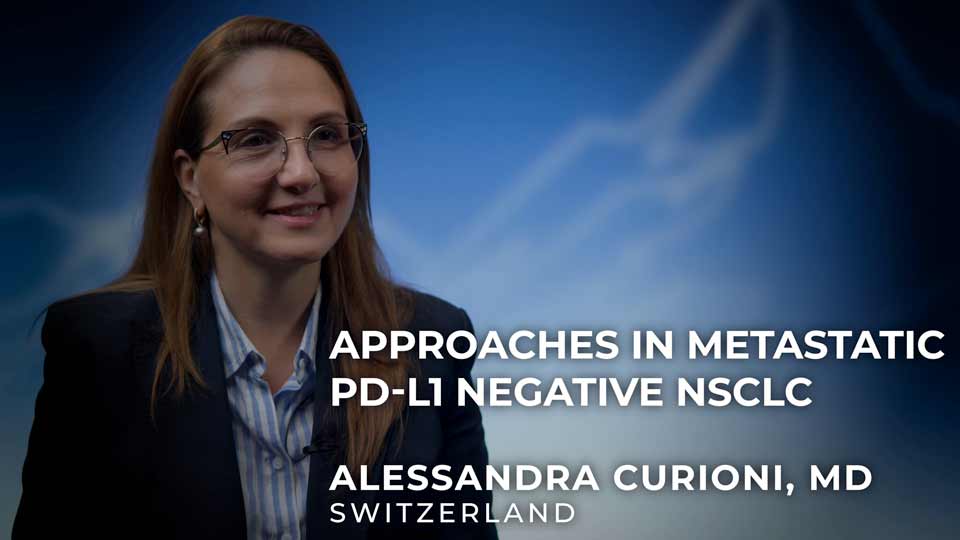
Approaches in Metastatic PD-L1 Negative NSCLC: An Interview with Prof. Alessandra Curioni-Fontecedro

Prof. Alessandra Curioni-Fontecedro discusses treatment approaches in metastatic PD-L1 negative non-small cell lung cancer in this on-demand expert interview.

A. Curioni-Fontecedro
Lung Cancer Review by Solange Peters, Martin Reck, Charles Rudin
Dec 18 2025
VIRTUAL ROUNDTABLE
Advanced NSCLCSCLCADCs

2025 Approvals & Highlights

} 1 h 49 min

S. PetersC. RudinM. Reck
Sep 26 2025
ILCS 2025
Immunotherapies

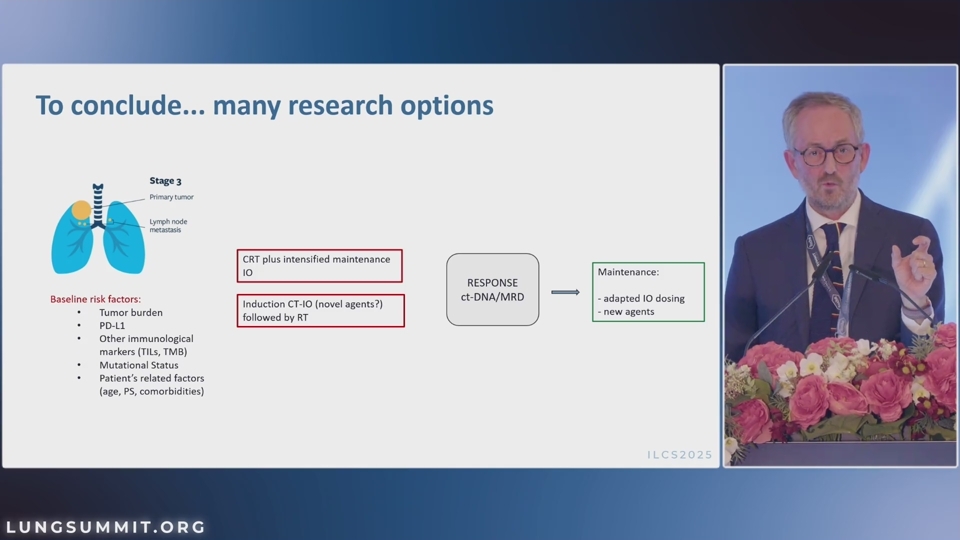
The Role of IO Added to Chemoradiation in Unresectable Stage III NSCLC

} 28 min

A. Filippi
Sep 26 2025
ILCS 2025
Immunotherapies

Tailoring IO in Res. NSCLC: Personalized Approaches for Improved Outcomes

} 36 min

P. Forde
IO in NSCLC by Solange Peters, Jordi Remon, Patrick Forde
Jun 25 2025
VIRTUAL ROUNDTABLE
Advanced NSCLCImmunotherapies

Immunotherapies in NSCLC

} 1h 47 min

P. FordeJ. RemonS. Peters
SCLC by Solange Peters, Giannis Mountzios, Jacob Sands
Jun 17 2025
VIRTUAL ROUNDTABLE
SCLCImmunotherapies

Small Cell Lung Cancer

} 1h 35 min

G. MountziosJ. SandsS. Peters
Jordi Remon
Oct 04 2024
ILCS 2024
Immunotherapies

Tailoring IO in Resectable NSCLC: Personalized Approaches for Improved Outcomes

} 25 min

J. Remon
Nov 13 2026
ILCS 2026
Advanced NSCLCResectable NSCLCSCLC

Panel: open questions & patient cases

Nov 13 2026
ILCS 2026
SCLC

Debate: which is the better choice in 1L ES-SCLC?

G. MountziosA. Dingemans
Nov 13 2026
ILCS 2026
SCLC

The emerging role of T-cell engagers and ADCs in SCLC

N. Frost
Nov 13 2026
ILCS 2026
Advanced NSCLC

New compounds and combinations for non-oncogene-addicted advanced NSCLC

A. Cortellini
Nov 13 2026
INDUSTRY SYMPOSIUM
Advanced NSCLCResectable NSCLCTargeted Therapies

One Backbone, Many Opportunities: Osimertinib Across the EGFRm NSCLC Journey

M. Hochmair
Nov 13 2026
INDUSTRY SYMPOSIUM
Advanced NSCLCTargeted Therapies

First-Line NSCLC in Transition: Opportunities and Challenges for KRAS G12C

A. Curioni-Fontecedro
Nov 13 2026
ILCS 2026
Advanced NSCLCADCs

The ADC wave: integrating new agents in NSCLC

D. Planchard
Nov 13 2026
ILCS 2026
Advanced NSCLCTargeted Therapies

Targeting (K)RAS with new compounds

C. Lovly
Articles
Nov 04 2026
RESEARCH
Advanced NSCLCImmunotherapies

Local ablative therapy alone after durvalumab was followed by an mOS of 18.7 months in oligoprogressive NSCLC

A. FilippiL. Hendriks
Nikolaj Frost
Oct 31 2026
RESEARCH
Resectable NSCLCImmunotherapies

KEYNOTE-867 tested pembrolizumab with SBRT in unresected stage I or II NSCLC

N. Frost
Charles Rudin
Oct 30 2026
RESEARCH
SCLCImmunotherapies

Tarlatamab gave an mOS of 13.6 months against 8.4 with chemotherapy in SCLC at extended DeLLphi-304 follow-up

C. RudinG. Mountzios
Martin Reck
Oct 30 2026
RESEARCH
Advanced NSCLCResectable NSCLCImmunotherapies

Neoadjuvant durvalumab plus chemotherapy led to resection in 74.6% of patients in the MDT-BRIDGE trial

M. ReckN. GirardA. Filippi
Oct 29 2026
RESEARCH
BiomarkersResectable NSCLCImmunotherapies

Early ctDNA clearance was associated with longer event-free survival in resectable NSCLC in NeoCOAST-2

T. CasconeP. Forde
Oct 29 2026
RESEARCH
Advanced NSCLCImmunotherapies

Adding chemotherapy to pembrolizumab lengthened PFS in PD-L1-high advanced NSCLC in PERSEE

M. Pérol
Oct 27 2026
RESEARCH
SCLCImmunotherapies

Tarlatamab added to durvalumab maintenance extended OS in extensive-stage SCLC

J. SandsM. PérolA. Dingemans
Oct 23 2026
RESEARCH
SCLCImmunotherapies

KEYVIBE-008 tested vibostolimab coformulated with pembrolizumab plus chemotherapy in first-line ES-SCLC

J. SandsM. Reck
Oct 21 2026
SPONSORED
Advanced NSCLCImmunotherapies

The “tail of the curve” is real: long-term survival in PD-L1–negative metastatic NSCLC

A. Curioni-Fontecedro
Oct 21 2026
RESEARCH
Advanced NSCLCBiomarkersResectable NSCLC

ctDNA on immunotherapy is prognostic across NSCLC stages, but ctDNA-guided treatment remains investigational

U. Malapelle
Oct 19 2026
RESEARCH
Advanced NSCLCImmunotherapies

Nivolumab plus ipilimumab in 545 Japanese patients with metastatic NSCLC: the LIGHT-NING 2.5-year update

H. Horinouchi
Oct 06 2026
RESEARCH
Advanced NSCLCImmunotherapies

Two-thirds of patients with PD-L1-high NSCLC received first-line immunotherapy alone in a real-world survey

D. Rodríguez-Abreu
Oct 05 2026
RESEARCH
SCLCImmunotherapies

Second-line therapy in ES-SCLC gave a median OS of 7.1 months in the Austrian LALUCA registry

M. Hochmair
Oct 04 2026
RESEARCH
SCLCImmunotherapies

Longer OS in Asian than non-Asian patients given atezolizumab plus chemotherapy for extensive-stage SCLC

S. LiuM. ReckC. Rudin
Oct 02 2026
RESEARCH
Advanced NSCLCBiomarkersImmunotherapies

High tumour mutational burden was associated with more frequent and earlier immune-related adverse events in advanced NSCLC

B. Ricciuti
Martin Reck
Sep 28 2026
RESEARCH
Resectable NSCLCImmunotherapies

AEGEAN’s second interim analysis kept the EFS benefit of perioperative durvalumab, on an OS reading that crosses 1

M. ReckM. Hochmair
Sep 26 2026
RESEARCH
Advanced NSCLCImmunotherapies

Incidental thymic radiation dose was independently associated with metastasis and death in 1107 patients with NSCLC

B. Ricciuti
Sep 15 2026
CONGRESS
Advanced NSCLCImmunotherapies

HARMONi-2: ivonescimab extends overall survival over pembrolizumab in China

Sep 15 2026
CONGRESS
Advanced NSCLCBiomarkersResectable NSCLC

WCLC 2026, day 4: tumour budding, BRAF class II and III, brain radiotherapy timing, and mobile CT screening

Sep 13 2026
CONGRESS
Advanced NSCLCSCLCADCs

WCLC 2026, day 2: MRI surveillance without prophylactic cranial irradiation, and two relapse trials at 13.3 and 18.5 months