In brief
- A review in Cancers brings together studies of liquid biopsy in patients with NSCLC treated with immune checkpoint inhibitors, from resectable to metastatic disease.
- In CTONG1804, 18-month event-free survival was 93.8% with ctDNA negativity after neoadjuvant therapy and surgery, against 47.3% with persistent ctDNA.
- In a NADIM II analysis, every patient with molecular residual disease after surgery relapsed, with ctDNA preceding radiographic recurrence by a median of 7.8 months.
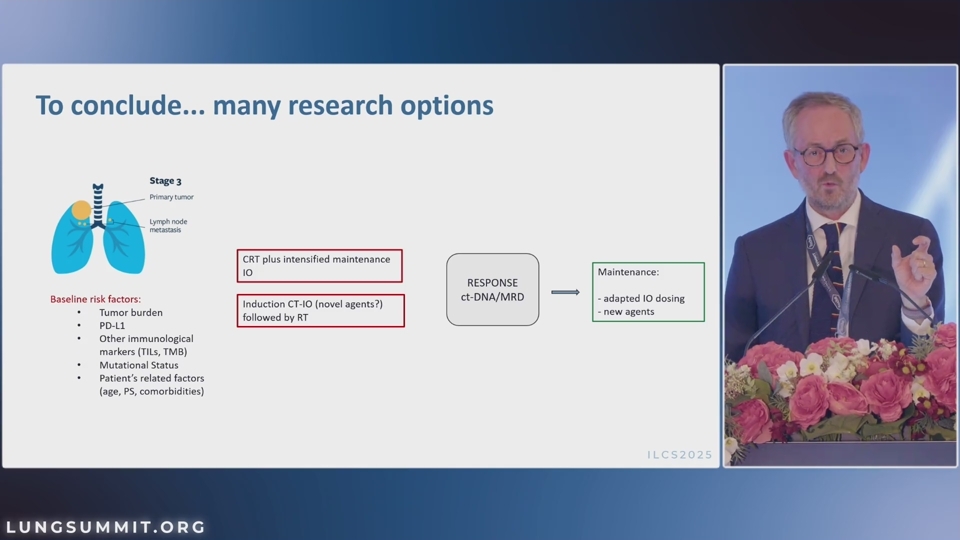
- The authors call for prospective, preferably randomised trials of ctDNA-guided escalation and de-escalation, and state that using ctDNA clearance to set the duration of immunotherapy should remain investigational.
Study at a glance
- Article type: Narrative review of published studies; no new data were collected
- Authors: 16 investigators from the University of Palermo and the University Federico II of Naples
- Settings covered: Perioperative ICIs, unresectable stage III disease and advanced NSCLC
- Analytes: ctDNA, cfDNA methylation, fragmentomics, plasma proteomics and blood tumour mutational burden
- Funding: None declared
Clearance before surgery tracked pathological response and survival
In the phase 2 CTONG1804 study of neoadjuvant nivolumab with or without chemotherapy, the percentage of patients with detectable ctDNA fell from 89.5% at baseline to 27.6% after surgery. Patients who were ctDNA-negative before surgery had a pathological complete response rate of 39.1%, against 6.7% in those who were not. In the single-arm NADIM trial, 5-year overall survival was 92.3% after ctDNA clearance and 59.2% with persistent ctDNA.
Clearance and pathological complete response were only partly concordant in NADIM. The authors read this as pathology measuring local eradication of the tumour and ctDNA measuring systemic residual disease.
Residual ctDNA after surgery marked relapse risk, not resistance to immunotherapy
In the AEGEAN biomarker analysis, the 10% of patients who remained MRD-positive after neoadjuvant durvalumab with chemotherapy had a 12-month disease-free survival of 14.3%, against 89.3% in MRD-negative patients. In IMpower010, adjuvant atezolizumab improved disease-free survival in both ctDNA-positive and ctDNA-negative patients, which the authors interpret as MRD reflecting the baseline risk of recurrence.
In advanced disease, rising ctDNA preceded radiographic progression in 68% of IMpower150 patients with progressive disease, in a retrospective analysis of serial samples. Molecular progression was not detected in every patient who progressed.
Low tumour shedding and clonal haematopoiesis limit what a single result means
Assay sensitivity depends on tumour shedding, plasma volume and the number of template molecules, so a negative result in low-volume disease has to be read against the cfDNA input and the limit of detection. Clonal haematopoiesis can produce false-positive findings. Methylation, fragmentomic and proteomic signatures separated outcomes in cohorts of 20 to 500 patients, and the review treats them as complementary layers that still need prospective validation.
“Ultimately, the key objective is not simply earlier molecular detection, but evidence that acting on these results improves outcomes.”Bazan Russo et al., Cancers (2026)
The authors ask for trials with predefined sampling schedules, actionable cut-offs, health-economic analyses and patient-centred endpoints. Until such trials report, they recommend that liquid biopsy complement imaging, pathology and clinical assessment instead of automatically overriding them.
Sources
- Cancers. The Dynamic Role of Liquid Biopsy in Patients with Non-Small Cell Lung Cancer Receiving Immune Checkpoint Inhibitors: Emerging Opportunities and Clinical Challenges (2026-10-08). doi.org
Featuring Lung Summit faculty
This study was co-authored by Lung Summit faculty Umberto Malapelle.
This article was produced independently by the Lung Summit editorial team, without industry funding or input.