SELECT FROM MENU

Therapy Areas
Drug Classes

       Therapy Areas

All Sessions

All Sessions

Resectable NSCLC

Resectable NSCLC

Advanced NSCLC

Advanced NSCLC

SCLC

SCLC

Biomarkers

Biomarkers

       Drug Classes

Targeted Therapies

Targeted Therapies

Immunotherapies

Immunotherapies

ADCs

ADCs

SCLCOctober 5, 2026

Second-line therapy in ES-SCLC gave a median OS of 7.1 months in the Austrian LALUCA registry

Patients with extensive-stage small cell lung cancer who received second-line therapy in routine Austrian practice had a median PFS of 4.7 months and a median OS of 7.1 months, according to an analysis of the prospective LALUCA registry by Daniel Moser and colleagues, published in Lung Cancer. Fewer than four in ten patients in the cohort reached a second line of treatment at all.
Share

In brief

  • In the Austrian LALUCA registry, 75 of 203 patients with extensive-stage small cell lung cancer (ES-SCLC) diagnosed between November 2020 and October 2025 received second-line therapy (36.9%).
  • Of the 128 patients who had no second-line treatment at data cut-off, 49.2% had died and 18.8% had moved to best supportive care.
  • Anthracycline-based regimens made up 57.3% of second-line treatment, topotecan 26.7% and platinum re-challenge 16.0%.
  • Second-line treatment lasted a median of 2 months, with a median progression-free survival (PFS) of 4.7 months and a median overall survival (OS) of 7.1 months.
  • Disease progression was the most common reason for stopping second-line treatment (30.7%), followed by a completed regimen (24.0%) and death (13.3%).

Study at a glance

  • Cohort: Austrian LALUCA registry, prospective and multicentre; 203 patients with histologically confirmed ES-SCLC diagnosed November 2020 to October 2025
  • Population: 75 patients (36.9%) who received second-line therapy
  • Treatment: anthracycline-based regimens 57.3%, topotecan 26.7%, platinum-based chemotherapy or chemoimmunotherapy re-challenge 16.0%
  • Primary outcomes: OS, PFS and time to next treatment (TTNT)
  • Survival: median PFS 4.7 months (95% CI 3.9 to 5.8); median OS 7.1 months (95% CI 5.1 to 9.3)
  • Treatment duration: median 2 months in second line (range 0.0 to 8.2); median TTNT from first to second line 6.4 months (range 0.3 to 38.7)
  • Not reported: outcomes by second-line regimen; the status of the 32.0% of untreated patients who had neither died nor moved to best supportive care

Little more than a third of patients reached second-line treatment

Of the 203 patients in the registry, 75 received a second line of systemic therapy. For the 128 who did not, the main reasons recorded at data cut-off were death (49.2% of that group) and a switch to best supportive care (18.8%).

For those who did go on to second-line therapy, the median time to next treatment from first to second line was 6.4 months, with a range from 0.3 to 38.7 months.

Anthracycline-based regimens were used more often than topotecan

Until recently, topotecan was the only second-line treatment approved for ES-SCLC in Europe, and the authors note that its limited efficacy has led clinicians to use a range of other strategies. In this registry, anthracycline-based regimens accounted for 57.3% of second-line treatment, against 26.7% for topotecan.

The remaining 16.0% of patients were re-challenged with platinum-based chemotherapy or chemoimmunotherapy. The data come from a registry of real-world care, so these shares describe what the participating centres used.

A median PFS of 4.7 months after two months of treatment

Across the 75 treated patients, median PFS was 4.7 months (95% CI 3.9 to 5.8) and median OS was 7.1 months (95% CI 5.1 to 9.3). The median duration of second-line treatment was 2 months, with a range of 0.0 to 8.2 months.

These are observational outcomes from a registry, with no comparator arm. The figures describe the 75 treated patients as a whole, who are 36.9% of the 203 in the registry.

“This real-world analysis shows poor outcomes in patients with progressing ES-SCLC, reflected by both short median PFS and duration of second-line treatment, along with high rates of treatment discontinuation due to progression, highlighting the urgent need for more effective and tolerable treatment options.”Moser et al., Lung Cancer (2026)

Progression ended second-line treatment in 30.7% of patients

Among those treated, disease progression was the most frequent reason for discontinuation, ahead of completion of the planned regimen in 24.0% and death in 13.3%. Taken together, these three reasons cover 68.0% of the treated patients.

The registry’s primary outcomes were OS, PFS and time to next treatment, and the authors’ conclusion rests on the short median PFS, the short treatment duration and the rate of discontinuation because of progression. The abstract does not describe the first-line regimens the patients received.

Sources

  1. Lung Cancer. Second-line therapy in extensive-stage small cell lung cancer: an unmet need highlighted by real-world evidence from the LALUCA registry (2026-09-01). doi.org

Featuring Lung Summit faculty

This study was co-authored by Lung Summit faculty Maximilian Hochmair.

This article was produced independently by the Lung Summit editorial team, without industry funding or input.

i 3 On This Page

Share

       Continue With

Related Topics

Videos
Jacob Sands, Solange Peters and Martin Reck
Dec102026
VIRTUAL ROUNDTABLE
Advanced NSCLCSCLCADCs

2026 Year in Review

Learn more about the event

S. PetersJ. SandsM. Reck
Nov 13 2026
ILCS 2026
Advanced NSCLCResectable NSCLCSCLC

Panel: open questions & patient cases

Nov 13 2026
ILCS 2026
SCLC

Debate: which is the better choice in 1L ES-SCLC?

G. MountziosA. Dingemans
Nov 13 2026
ILCS 2026
SCLC

The emerging role of T-cell engagers and ADCs in SCLC

N. Frost
Nov 13 2026
ILCS 2026
Resectable NSCLCImmunotherapies

Latest options in early-stage NSCLC: novel IO approaches for improved outcomes

S. Patel
Prof. Martin Reck
Nov 04 2026
SPONSORED EXPERT TALK
Resectable NSCLCImmunotherapies

MDT-BRIDGE in Resectable and Borderline Resectable NSCLC

Prof. Martin Reck presents and discusses the phase 2 MDT-BRIDGE trial in resectable and borderline resectable non-small cell lung cancer in this on-demand expert talk.

M. Reck
Dr. Jacob Sands
Nov 04 2026
SPONSORED INTERVIEW
SCLCImmunotherapies

New Therapy Options in SCLC and AE Management

Dr. Jacob Sands discusses new treatment options in small cell lung cancer and the management of their adverse events in this on-demand expert interview.

J. Sands
Oct252026
ESMO 2026 SYMPOSIUM
SCLCImmunotherapies

SCLC Symposium at ESMO 2026: From IO-Standards to the TCE Era

A symposium at ESMO Congress 2026 on small-cell lung cancer, from immunotherapy standards to the emerging era of DLL3 T-cell engagers. Recording to follow.

M. ReckS. PetersG. MountziosN. Reguart
Prof. Alessandra Curioni-Fontecedro discussing approaches in metastatic PD-L1 negative NSCLC
May 04 2026
SPONSORED INTERVIEW
Advanced NSCLCImmunotherapies

Approaches in Metastatic PD-L1 Negative NSCLC: An Interview with Prof. Alessandra Curioni-Fontecedro

Prof. Alessandra Curioni-Fontecedro discusses treatment approaches in metastatic PD-L1 negative non-small cell lung cancer in this on-demand expert interview.

A. Curioni-Fontecedro
Lung Cancer Review by Solange Peters, Martin Reck, Charles Rudin
Dec 18 2025
VIRTUAL ROUNDTABLE
Advanced NSCLCSCLCADCs

2025 Approvals & Highlights

} 1 h 49 min

S. PetersC. RudinM. Reck
Sep 26 2025
ILCS 2025
SCLC

Reshaping Approaches in SCLC with the Latest Advances in LS- and ES-Disease

} 34 min

R. Manochakian
Sep 26 2025
ILCS 2025
Immunotherapies

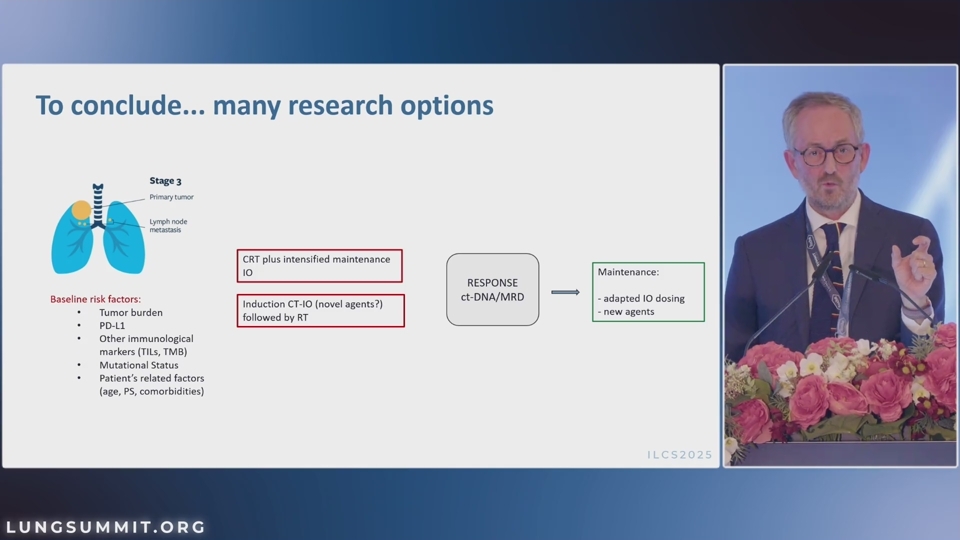
The Role of IO Added to Chemoradiation in Unresectable Stage III NSCLC

} 28 min

A. Filippi
Sep 26 2025
ILCS 2025
Immunotherapies

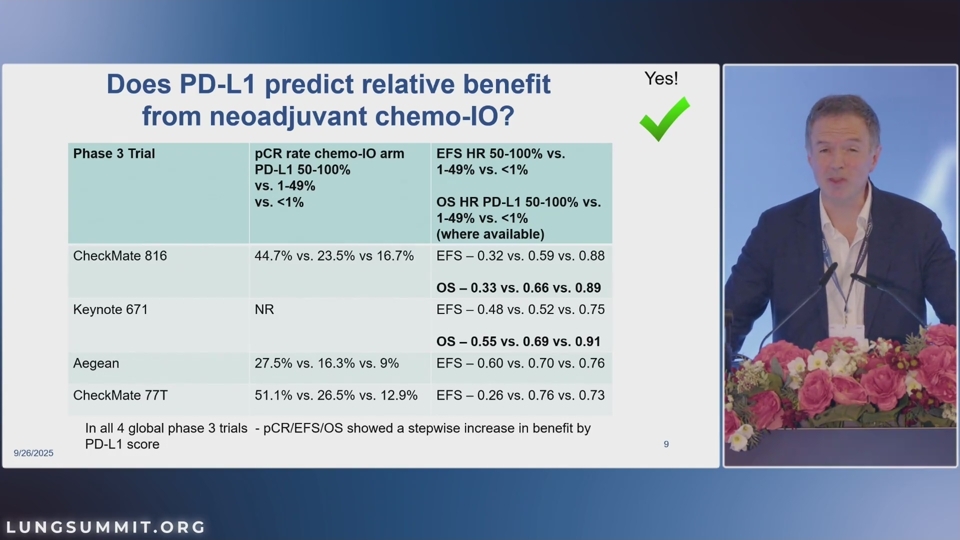
Tailoring IO in Res. NSCLC: Personalized Approaches for Improved Outcomes

} 36 min

P. Forde
IO in NSCLC by Solange Peters, Jordi Remon, Patrick Forde
Jun 25 2025
VIRTUAL ROUNDTABLE
Advanced NSCLCImmunotherapies

Immunotherapies in NSCLC

} 1h 47 min

P. FordeJ. RemonS. Peters
SCLC by Solange Peters, Giannis Mountzios, Jacob Sands
Jun 17 2025
VIRTUAL ROUNDTABLE
SCLCImmunotherapies

Small Cell Lung Cancer

} 1h 35 min

G. MountziosJ. SandsS. Peters
Stephen Liu
Oct 04 2024
ILCS 2024
SCLC

Reshaping Our Approaches in SCLC: Latest Therapeutic Options and Future Strategies

} 25 min

S. Liu
Jordi Remon
Oct 04 2024
ILCS 2024
Immunotherapies

Tailoring IO in Resectable NSCLC: Personalized Approaches for Improved Outcomes

} 25 min

J. Remon
Nov 13 2026
ILCS 2026
Advanced NSCLC

New compounds and combinations for non-oncogene-addicted advanced NSCLC

A. Cortellini
Nov 13 2026
INDUSTRY SYMPOSIUM
Advanced NSCLCResectable NSCLCTargeted Therapies

One Backbone, Many Opportunities: Osimertinib Across the EGFRm NSCLC Journey

M. Hochmair
Nov 13 2026
INDUSTRY SYMPOSIUM
Advanced NSCLCTargeted Therapies

First-Line NSCLC in Transition: Opportunities and Challenges for KRAS G12C

A. Curioni-Fontecedro
Articles
Nov 16 2026
RESEARCH
Immunotherapies

Lenvatinib plus pembrolizumab gave a median PFS of 22.1 months in pretreated thymic carcinoma and B3 thymoma

J. RemonN. GirardN. Reguart
Charles Rudin
Nov 14 2026
RESEARCH
Advanced NSCLCSCLCTargeted Therapies

SCLC transformation in 5 of 11 patients given first-line osimertinib with platinum and etoposide

C. Rudin
Nov 04 2026
RESEARCH
Advanced NSCLCImmunotherapies

Local ablative therapy alone after durvalumab was followed by an mOS of 18.7 months in oligoprogressive NSCLC

A. FilippiL. Hendriks
Nikolaj Frost
Oct 31 2026
RESEARCH
Resectable NSCLCImmunotherapies

KEYNOTE-867 tested pembrolizumab with SBRT in unresected stage I or II NSCLC

N. Frost
Charles Rudin
Oct 30 2026
RESEARCH
SCLCImmunotherapies

Tarlatamab gave an mOS of 13.6 months against 8.4 with chemotherapy in SCLC at extended DeLLphi-304 follow-up

C. RudinG. Mountzios
Martin Reck
Oct 30 2026
RESEARCH
Advanced NSCLCResectable NSCLCImmunotherapies

Neoadjuvant durvalumab plus chemotherapy led to resection in 74.6% of patients in the MDT-BRIDGE trial

M. ReckN. GirardA. Filippi
Oct 29 2026
RESEARCH
BiomarkersResectable NSCLCImmunotherapies

Early ctDNA clearance was associated with longer event-free survival in resectable NSCLC in NeoCOAST-2

T. CasconeP. Forde
Oct 29 2026
RESEARCH
Advanced NSCLCImmunotherapies

Adding chemotherapy to pembrolizumab lengthened PFS in PD-L1-high advanced NSCLC in PERSEE

M. Pérol
Oct 27 2026
RESEARCH
SCLCImmunotherapies

Tarlatamab added to durvalumab maintenance extended OS in extensive-stage SCLC

J. SandsM. PérolA. Dingemans
Oct 23 2026
RESEARCH
SCLCImmunotherapies

KEYVIBE-008 tested vibostolimab coformulated with pembrolizumab plus chemotherapy in first-line ES-SCLC

J. SandsM. Reck
Oct 21 2026
SPONSORED
Advanced NSCLCImmunotherapies

The “tail of the curve” is real: long-term survival in PD-L1–negative metastatic NSCLC

A. Curioni-Fontecedro
Oct 21 2026
RESEARCH
Advanced NSCLCBiomarkersResectable NSCLC

ctDNA on immunotherapy is prognostic across NSCLC stages, but ctDNA-guided treatment remains investigational

U. Malapelle
Oct 19 2026
RESEARCH
Advanced NSCLCImmunotherapies

Nivolumab plus ipilimumab in 545 Japanese patients with metastatic NSCLC: the LIGHT-NING 2.5-year update

H. Horinouchi
Oct 07 2026
RESEARCH
BiomarkersSCLC

IASLC pathologists propose a grade 3 category for lung carcinoids with more than 10 mitoses

P. Hofman
Oct 06 2026
RESEARCH
Advanced NSCLCImmunotherapies

Two-thirds of patients with PD-L1-high NSCLC received first-line immunotherapy alone in a real-world survey

D. Rodríguez-Abreu
Nikolaj Frost
Oct 04 2026
RESEARCH
Advanced NSCLCSCLCTargeted Therapies

Checkpoint inhibitors were associated with longer survival in NSCLC after allogeneic stem cell transplantation

N. FrostM. ReckA. Cortellini
Oct 04 2026
RESEARCH
SCLCImmunotherapies

Longer OS in Asian than non-Asian patients given atezolizumab plus chemotherapy for extensive-stage SCLC

S. LiuM. ReckC. Rudin
Oct 02 2026
RESEARCH
Advanced NSCLCBiomarkersImmunotherapies

High tumour mutational burden was associated with more frequent and earlier immune-related adverse events in advanced NSCLC

B. Ricciuti
Sep 30 2026
RESEARCH
Advanced NSCLCSCLCADCs

Pulmonary adverse events affected almost a third of lung cancer patients treated with ADCs in a 24-study meta-analysis

C. Rolfo
Martin Reck
Sep 28 2026
RESEARCH
Resectable NSCLCImmunotherapies

AEGEAN’s second interim analysis kept the EFS benefit of perioperative durvalumab, on an OS reading that crosses 1

M. ReckM. Hochmair