In brief
- Seven thoracic oncology experts met virtually on 10 July 2025 under the Italian Association of Thoracic Oncology and agreed shared-opinion statements on neoadjuvant and perioperative chemo-immunotherapy in resectable NSCLC.
- The panel treated chemo-immunotherapy as a new standard for resectable stage II-III disease, citing improved pathological complete response, event-free survival and overall survival, and deemed it overall safe without compromising surgery.
- No evidence currently favours a perioperative strategy over a neoadjuvant one on efficacy, or the reverse. The panel emphasised that regimen choice should take account of trial eligibility criteria, local drug approvals and patient factors.
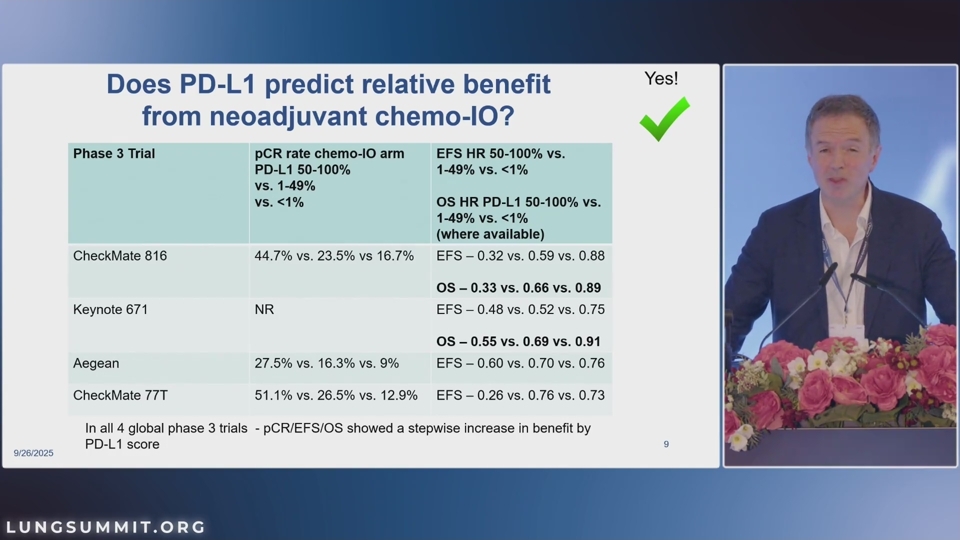
- PD-L1-negative tumours were not excluded from immunotherapy benefit, although the panel recorded the magnitude of that benefit as lower.
- The statements were developed through moderated discussion. The abstract reports no effect sizes for the three endpoints cited, no voting thresholds and no strength-of-recommendation grading.
A new standard for resectable stage II-III disease, conditional on multidisciplinary board review
The panel endorsed pathological mediastinal staging and molecular testing in every candidate before therapy begins, and placed neoadjuvant and perioperative chemo-immunotherapy as a new standard for resectable stage II-III NSCLC. The statement is conditional: the panel reached it for patients whose treatment has been through a multidisciplinary board discussion, which it describes as thorough and thoughtful.
The grounds given are improved pathological complete response, event-free survival and overall survival, together with a safety record the panel deemed acceptable and no loss of surgical feasibility. The abstract names those three endpoints without attaching a figure to any of them, and identifies no individual trial. The statements were developed through moderated discussion of the pivotal trials. The abstract describes no systematic review and no strength-of-recommendation grading applied to the result, while the paper’s own conclusions call the statements guideline recommendations for clinical practice.
No evidence favouring perioperative over neoadjuvant treatment, in either direction
On the question clinicians most often face, the panel recorded that no evidence currently favours a perioperative strategy over a neoadjuvant one on efficacy, nor the reverse. It therefore left regimen choice to trial eligibility criteria, local drug approvals and patient factors. Neoadjuvant or perioperative treatment was recommended particularly for resectable stage III and node-positive disease, while upfront surgery could still be considered in selected stage II N0 cases.
PD-L1-negative tumours kept in, with the magnitude of benefit recorded as lower
The panel did not exclude PD-L1-negative tumours from immunotherapy benefit, and recorded the magnitude of that benefit as lower than in PD-L1-positive disease. No figure is given for the size of the difference, and no threshold is proposed at which the smaller benefit would change a treatment decision. The panel set its statements against the setting they apply to:
“Chemo-immunotherapy is an essential component of therapy for subjects with operable and resectable NSCLC.”de Marinis et al., Lung Cancer (2026)
Comparative trials and biomarker-driven personalisation named as the priorities
The panel put three research needs at the top of its list: trials comparing neoadjuvant against perioperative strategies directly, studies of biomarker-driven personalisation of therapy, and novel combination approaches. The first is the evidence gap its own sequencing statement rests on.
Sources
- Lung Cancer. Neoadjuvant and perioperative chemo-immunotherapy in early-stage non-small cell lung cancer: international expert panel meeting by AIOT (2026-07-11). doi.org
Featuring Lung Summit faculty
This study was co-authored by Lung Summit faculty Tina Cascone, Patrick Forde and Antonio Passaro.
This article was produced independently by the Lung Summit editorial team, without industry funding or input.