In brief
- In a nationwide US clinicogenomic database of 965 patients with advanced NSCLC, a raised ctDNA tumour fraction was prognostic for worse outcomes on immune checkpoint blockade.
- At a tumour fraction of 5% or above, patients derived benefit from adding chemotherapy to checkpoint blockade (hazard ratio for real-world progression-free survival 0.58, 95% CI 0.41 to 0.82; p = 0.002). The 5% cut-off was validated in an independent cohort from Gustave Roussy.
- Tumour fraction correlated with total metabolic tumour volume on PET (rho = 0.46, p < 0.001) and was influenced by TP53 and RB1 mutations.
Background
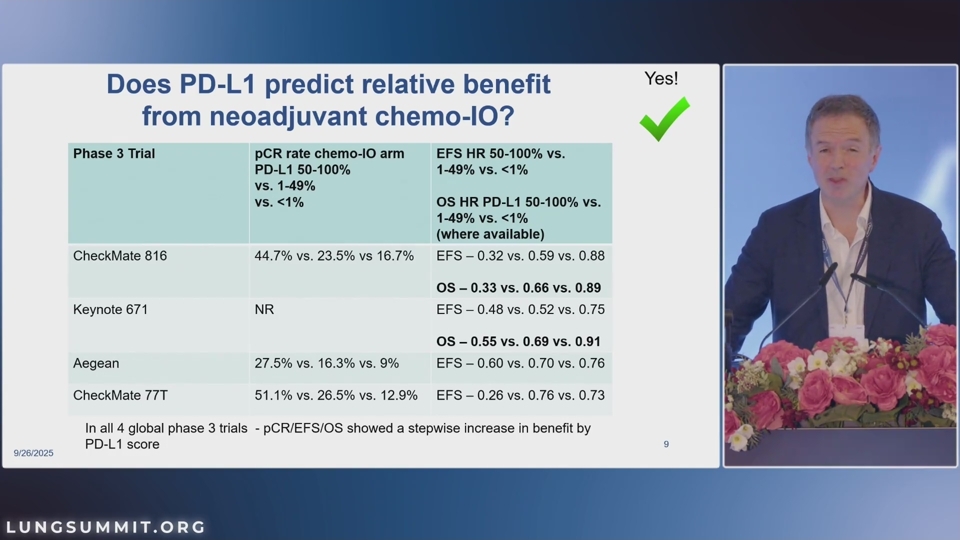
Immune checkpoint blockers (ICBs) have changed the treatment of advanced NSCLC, and the question of who needs chemotherapy alongside them remains open. It is sharpest in tumours with PD-L1 expression of 50% or more, where checkpoint blockade alone is an accepted option and the cost of adding chemotherapy unnecessarily is real. PD-L1 is an imperfect biomarker, and better selection tools have been sought.
Study design
Liquid biopsy assessment was performed with hybrid capture-based next-generation sequencing of plasma cell-free DNA. The investigators collected liquid biopsy data together with the molecular profile and clinico-pathological data, and measured the predictive and prognostic value of tumour fraction in a de-identified nationwide US NSCLC clinicogenomic database. An independent cohort of patients with advanced NSCLC from Gustave Roussy was used to validate the findings and to study how ctDNA tumour fraction relates to total metabolic tumour volume on PET and to its molecular correlates.
Findings
In the clinicogenomic database (n = 965), an elevated ctDNA tumour fraction was prognostic for worse outcomes on checkpoint blockade. At 5% or above, tumour fraction was also predictive of benefit from checkpoint blockade plus chemotherapy, with a hazard ratio for real-world progression-free survival of 0.58 (95% CI 0.41 to 0.82; p = 0.002). The 5% cut-off was then validated in the independent Gustave Roussy cohort.
In 283 patients who had paired PET scans, ctDNA tumour fraction correlated with metabolic tumour volume (rho = 0.46, p < 0.001), and the measure was influenced by TP53 and RB1 mutations. Both observations bear on how the number should be read: it is not a clean measure of disease burden alone, and tumour biology contributes to it.
Interpretation
The authors concluded that ctDNA tumour fraction integrates disease burden and biology, and that patients with a high tumour fraction derive greater benefit from chemo-immunotherapy. On that basis they proposed the measure as a biomarker to guide treatment intensification.
What comes next
The findings come from a de-identified nationwide database with an independent validation cohort, and the progression-free survival endpoint is a real-world one rather than the outcome of a randomised comparison. The authors set out the 5% cut-off as a biomarker to guide treatment intensification, and they do not report a trial that has assigned treatment by it.
Sources
- Clinical Cancer Research. Role of ctDNA Tumor Fraction in Selecting Immunotherapy Based Regimens in Advanced Non-small Cell Lung Cancer (2026-07-13). doi.org
Featuring Lung Summit faculty
This study was co-authored by Lung Summit faculty David Planchard.
This article was produced independently by the Lung Summit editorial team, without industry funding or input.