SELECT FROM MENU

Therapy Areas
Drug Classes

       Therapy Areas

All Sessions

All Sessions

Resectable NSCLC

Resectable NSCLC

Advanced NSCLC

Advanced NSCLC

SCLC

SCLC

Biomarkers

Biomarkers

       Drug Classes

Targeted Therapies

Targeted Therapies

Immunotherapies

Immunotherapies

ADCs

ADCs

Advanced NSCLCOctober 8, 2026

Amivantamab, lazertinib and bevacizumab gave a 33% response rate after osimertinib in AMAZE-lung

A chemotherapy-free triplet of amivantamab, lazertinib and bevacizumab produced a 12-week objective response rate of 33% in patients with EGFR-mutant advanced NSCLC after progression on a third-generation EGFR tyrosine-kinase inhibitor (TKI), according to the primary analysis of the single-arm phase 2 ETOP 18-21 AMAZE-lung trial, published in The Lancet Respiratory Medicine.
Share

In brief

  • ETOP 18-21 AMAZE-lung gave amivantamab, lazertinib and bevacizumab, with no chemotherapy, to 61 patients with EGFR-mutant NSCLC that had progressed on osimertinib or lazertinib.
  • The 12-week objective response rate was 33% (20 of the first 60 patients), meeting the primary endpoint by rejecting a rate of 20% or less.
  • Across all 61 patients, 24 (39%) had a partial response, 22 of them confirmed at a later scan.
  • Grade 3 to 4 treatment-related adverse events occurred in 43% of patients; infusion-related reactions (58%) and acneiform rash (50%) were the most common, with no treatment-related deaths.
  • Median follow-up was 9.0 months at the primary analysis, and 28 patients were still on treatment.

Study at a glance

  • Trial: ETOP 18-21 AMAZE-lung (NCT05601973), prospective, international, multicentre, single-arm phase 2
  • Cohort: 61 patients enrolled at 17 sites in Europe, March 2023 to May 2024
  • Population: Advanced non-squamous NSCLC with EGFR exon 19 deletion, L858R or both, progressing after first-line or second-line osimertinib or lazertinib
  • Treatment: Intravenous amivantamab every 3 weeks, oral lazertinib 240 mg daily and bevacizumab 15 mg/kg every 3 weeks
  • Primary endpoint: 12-week objective response rate (RECIST 1.1) in the first 60 patients: 33% (95.6% CI 21 to 47)
  • Brain metastases: 18 patients (30%) had asymptomatic brain metastases at screening
  • Safety: Grade 3 to 4 treatment-related adverse events in 26 of 60 patients (43%); no treatment-related deaths
  • Not reported: Progression-free survival, overall survival, duration of response and intracranial response, in the abstract

A chemotherapy-free alternative to the MARIPOSA-2 regimen

Amivantamab, a bispecific antibody against EGFR and MET, is approved with chemotherapy for EGFR-mutant NSCLC after progression on osimertinib, on the basis of the MARIPOSA-2 trial. AMAZE-lung tested whether chemotherapy could be replaced with lazertinib, a third-generation EGFR TKI, and bevacizumab, an anti-VEGF antibody. The authors’ rationale is that MET and angiogenic pathways become activated in EGFR-mutant NSCLC as resistance to TKIs develops.

Eligible adults had a sensitising EGFR mutation and had progressed on osimertinib or lazertinib given in the first or second line. Amivantamab was dosed at 1400 mg (1750 mg at 80 kg or more) for the first two cycles, then at 1750 mg (2100 mg at 80 kg or more) from cycle three. Treatment continued until progression or intolerable toxicity. The trial was run by the European Thoracic Oncology Platform (ETOP) and funded by the ETOP IBCSG Partners Foundation and Janssen Pharmaceutica.

Twenty responses at 12 weeks, one more than the threshold required

The statistical design required at least 19 responses among the first 60 patients to reject a response rate of 20% or less in favour of 40%, at a 2.2% significance level with 93% power. Twenty patients responded by week 12, which met the primary endpoint with one response to spare.

Over the full cohort of 61 patients, 24 (39%; 95% CI 27 to 53) had a partial response, and 22 of these were confirmed at a subsequent tumour evaluation. The point estimate of 33% sits below the 40% rate the design was powered to detect, and the 95.6% confidence interval runs from 21% to 47%.

The patients enrolled were mostly women (70%), White (82%) and never-smokers (61%), with a median age of 65 years. Sixty-two per cent had an ECOG performance status of 1 and 61% had stage IVB disease. All tumours were adenocarcinomas.

“Combined amivantamab, lazertinib, and bevacizumab showed durable anti-tumour activity, representing a promising chemotherapy-sparing alternative after progression on third-generation EGFR TKIs.”Soo et al., The Lancet Respiratory Medicine (2026)

Infusion reactions in 58% and venous thromboembolism in 17%

Safety was assessed in the 60 patients who received at least one dose. Infusion-related reactions of any grade occurred in 35 patients (58%) and acneiform rash in 30 (50%). Treatment-related venous thromboembolism was reported in ten patients (17%), two of them (3%) at grade 3 to 4.

Serious treatment-related adverse events occurred in 12 patients (20%). The authors describe the safety findings as consistent with known toxicity profiles.

A single-arm result with nine months of follow-up

AMAZE-lung had no comparator arm, so the response rate cannot be set directly against amivantamab plus chemotherapy or against chemotherapy alone in the post-osimertinib setting. At the database cutoff of 26 August 2024, median follow-up was 9.0 months (IQR 5.8 to 12.6), and 28 patients were still receiving the combination. Follow-up for these patients is ongoing.

Sources

  1. The Lancet Respiratory Medicine. Combined amivantamab, lazertinib, and bevacizumab in patients with EGFR-mutant advanced non-small-cell lung cancer with acquired resistance to a third-generation EGFR tyrosine-kinase inhibitor (ETOP 18-21 AMAZE-lung): a prospective, international, multicentre, single-arm, phase 2 trial (2026-10-01). doi.org

Featuring Lung Summit faculty

This study was co-authored by Lung Summit faculty Maurice Pérol, Alfredo Addeo, Solange Peters and Rolf A. Stahel.

This article was produced independently by the Lung Summit editorial team, without industry funding or input.

i 3 On This Page

Share

       Continue With

Related Topics

Videos
Oliver Gautschi on EGFR+ NSCLC
Jul 20 2026
SPONSORED INTERVIEW
Advanced NSCLCTargeted Therapies

Advances in EGFR+ NSCLC: An Interview with Prof. Oliver Gautschi

Prof. Oliver Gautschi discusses recent advances in the treatment of EGFR-mutant non-small cell lung cancer in this on-demand expert interview.

O. Gautschi
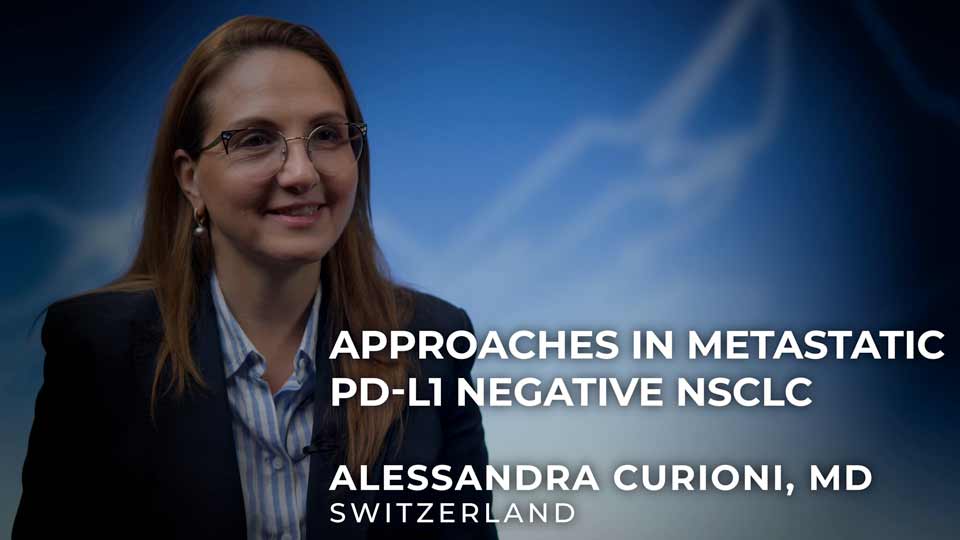
Prof. Alessandra Curioni-Fontecedro discussing approaches in metastatic PD-L1 negative NSCLC
May 04 2026
SPONSORED INTERVIEW
Advanced NSCLCImmunotherapies

Approaches in Metastatic PD-L1 Negative NSCLC: An Interview with Prof. Alessandra Curioni-Fontecedro

Prof. Alessandra Curioni-Fontecedro discusses treatment approaches in metastatic PD-L1 negative non-small cell lung cancer in this on-demand expert interview.

A. Curioni-Fontecedro
Lung Cancer Review by Solange Peters, Martin Reck, Charles Rudin
Dec 18 2025
VIRTUAL ROUNDTABLE
Advanced NSCLCSCLCADCs

2025 Approvals & Highlights

} 1 h 49 min

S. PetersC. RudinM. Reck
Sep 26 2025
ILCS 2025
Advanced NSCLC

Latest Options for Non-Oncogene Addicted Advanced NSCLC in Frontline and Beyond

} 32 min

A. Curioni-Fontecedro
Sep 26 2025
SPONSORED INTERVIEW
Advanced NSCLCTargeted Therapies

Latest Advances in Frontline EGFR+ NSCLC

} 14 min

A. Curioni-Fontecedro
Sep 26 2025
INDUSTRY SYMPOSIUM
Advanced NSCLCTargeted Therapies

Unlocking New Potentials in EGFR-Mutant NSCLC

} 30 min

A. Passaro
Sep 26 2025
ILCS 2025
Targeted Therapies

DEBATE: Which Is the Better Choice in EGFR+ Advanced NSCLC?

} 31 min

T. Newsom-DavisX. Le
Sep 26 2025
ILCS 2025
Targeted Therapies

Actionable Genomic Alterations – Including HER2 and MET

} 26 min

S. Saw
Sep 26 2025
ILCS 2025
Targeted Therapies

Targeting EGFR and ALK in NSCLC

} 26 min

T. John
Sep 26 2025
ILCS 2025
Advanced NSCLC

Open Discussion on Patient Cases

} 22 min

Targeted Therapies by Oliver Gautschi, Jarushka Naidoo, Nicolas Girard
Jul 10 2025
VIRTUAL ROUNDTABLE
Advanced NSCLCTargeted Therapies

Targeted Therapies in NSCLC

} 1h 30 min

O. GautschiJ. NaidooN. Girard
IO in NSCLC by Solange Peters, Jordi Remon, Patrick Forde
Jun 25 2025
VIRTUAL ROUNDTABLE
Advanced NSCLCImmunotherapies

Immunotherapies in NSCLC

} 1h 47 min

P. FordeJ. RemonS. Peters
Girard ADCs
Oct 05 2024
INDUSTRY SYMPOSIUM
Advanced NSCLCADCs

Best Practices in Managing Adverse Events with ADCs in NSCLC

} 18 min

N. Girard
Patient Cases
Oct 04 2024
ILCS 2024
Advanced NSCLCResectable NSCLC

Patient Cases & Open Questions

} 32 min

Sandip Patel & Giannis Mountzios
Oct 04 2024
ILCS 2024
Advanced NSCLC

DEBATE: Balancing Efficacy, Toxicity, and Patient-Centered Care For IO Duration in NSCLC

} 33 min

G. MountziosS. Patel
Biagio Ricciuti
Oct 04 2024
ILCS 2024
Targeted Therapies

Decoding Actionable Alterations: Insights from KRAS, HER2, and c-MET

} 25 min

B. Ricciuti
Roberto Ferrara
Oct 04 2024
ILCS 2024
Targeted Therapies

Rare But Actionable: How To Target for RET, METex14 and NTRK

} 20 min

R. Ferrara
Anne-Marie Dingemans
Oct 04 2024
ILCS 2024
Targeted Therapies

Current Options in Targeting EGFR and ALK Beyond Osimertinib and Alectinib

} 25 min

A. Dingemans
Nov132026
ILCS 2026

The International Lung Cancer Summit 2026

Learn more about the event

S. PetersA. AddeoM. DasH. HorinouchiT. SequeiraC. LovlyD. PlanchardS. PatelA. CortelliniN. FrostG. MountziosA. Dingemans
Oct252026
ESMO 2026 SYMPOSIUM
SCLC

SCLC Symposium at ESMO 2026: From IO-Standards to the TCE Era

Learn more about the event

M. ReckS. PetersG. MountziosN. Reguart
Articles
Oct 06 2026
RESEARCH
Advanced NSCLCImmunotherapies

Two-thirds of patients with PD-L1-high NSCLC received first-line immunotherapy alone in a real-world survey

D. Rodríguez-Abreu
Alfredo Addeo
Oct 05 2026
RESEARCH
Advanced NSCLCTargeted Therapies

A JCO review sets PACC mutations and exon 20 insertions apart from classical EGFR mutations in NSCLC

A. AddeoX. Le
Nikolaj Frost
Oct 04 2026
RESEARCH
Advanced NSCLCSCLCTargeted Therapies

Checkpoint inhibitors were associated with longer survival in NSCLC after allogeneic stem cell transplantation

N. FrostM. ReckA. Cortellini
Oct 03 2026
RESEARCH
Advanced NSCLCResectable NSCLCTargeted Therapies

AI-extracted records describe stage I–III NSCLC care at four Spanish hospitals before immunotherapy

A. Calles
Oct 03 2026
RESEARCH
Advanced NSCLCTargeted Therapies

KRAS inhibitors in NSCLC: modest survival gains, inevitable resistance and combinations in early trials

V. Noronha
Oct 02 2026
RESEARCH
Advanced NSCLCTargeted Therapies

Sutetinib produced responses in 71% of patients with uncommon EGFR mutations in a phase IIb trial

X. Le
Oct 02 2026
RESEARCH
Advanced NSCLCBiomarkersImmunotherapies

High tumour mutational burden was associated with more frequent and earlier immune-related adverse events in advanced NSCLC

B. Ricciuti
Oct 01 2026
RESEARCH
Advanced NSCLCTargeted Therapies

Uncommon EGFR exon 19 deletions were associated with shorter PFS on osimertinib in a 111-patient study

H. Horinouchi
Oct 01 2026
RESEARCH
Targeted Therapies

RAS alterations drove resistance in about one in ten oncogene-driven lung cancers progressing on targeted therapy

B. RicciutiJ. RemonD. Planchard
Sep 30 2026
RESEARCH
Advanced NSCLCSCLCADCs

Pulmonary adverse events affected almost a third of lung cancer patients treated with ADCs in a 24-study meta-analysis

C. Rolfo
Sep 26 2026
RESEARCH
Advanced NSCLCImmunotherapies

Incidental thymic radiation dose was independently associated with metastasis and death in 1107 patients with NSCLC

B. Ricciuti
Sep 25 2026
RESEARCH
Resectable NSCLCTargeted Therapies

Multi-omic profiling separated recurrence risk within pathological stage in resected EGFR-mutant lung adenocarcinoma

S. Saw
Portrait of Dr. Alexander Drilon
Sep 23 2026
CONGRESS
Advanced NSCLCTargeted Therapies

Zidesamtinib produced responses in 94% of ROS1 TKI-naive patients in ARROS-1

Sep 18 2026
INDUSTRY NEWS
Advanced NSCLCTargeted Therapies

Sevabertinib approved in the US for untreated HER2-mutant NSCLC

Sep 17 2026
CONGRESS
Resectable NSCLCTargeted Therapies

Adjuvant osimertinib reduced the risk of death by 47% at eight years in ADAURA

Sep 17 2026
RESEARCH
Advanced NSCLCTargeted Therapies

Grade 3 adverse events on the FLAURA2 combination fell from 43% during induction to 14% on osimertinib alone

D. Planchard
Sep 16 2026
CONGRESS
Advanced NSCLCADCs

First-line trastuzumab deruxtecan extended median PFS to 14.3 months in HER2-mutant NSCLC

Sep 16 2026
CONGRESS
SCLCTargeted Therapies

Tam-Peli extended median OS to 13.3 months in relapsed SCLC, against 9.4 months with topotecan

Sep 15 2026
CONGRESS
Advanced NSCLCImmunotherapies

HARMONi-2: ivonescimab extends overall survival over pembrolizumab in China

Sep 15 2026
CONGRESS
Advanced NSCLCBiomarkersResectable NSCLC

WCLC 2026, day 4: tumour budding, BRAF class II and III, brain radiotherapy timing, and mobile CT screening