Members only
The full article is available to registered members
Log in above for free to read the complete write-up, figures and references.
In brief
- In Prof. Curioni-Fontecedro’s experience at the Cantonal Hospital Fribourg (HFR), long-term survivors in advanced NSCLC are no longer the exception; the HFR registry has collected more than 800 cases with roughly 100 data points per patient.
- PD-L1–negative disease (tumour proportion score, TPS < 1%) concerns around one third of all NSCLC cases, and these tumours respond less to immunotherapy alone.
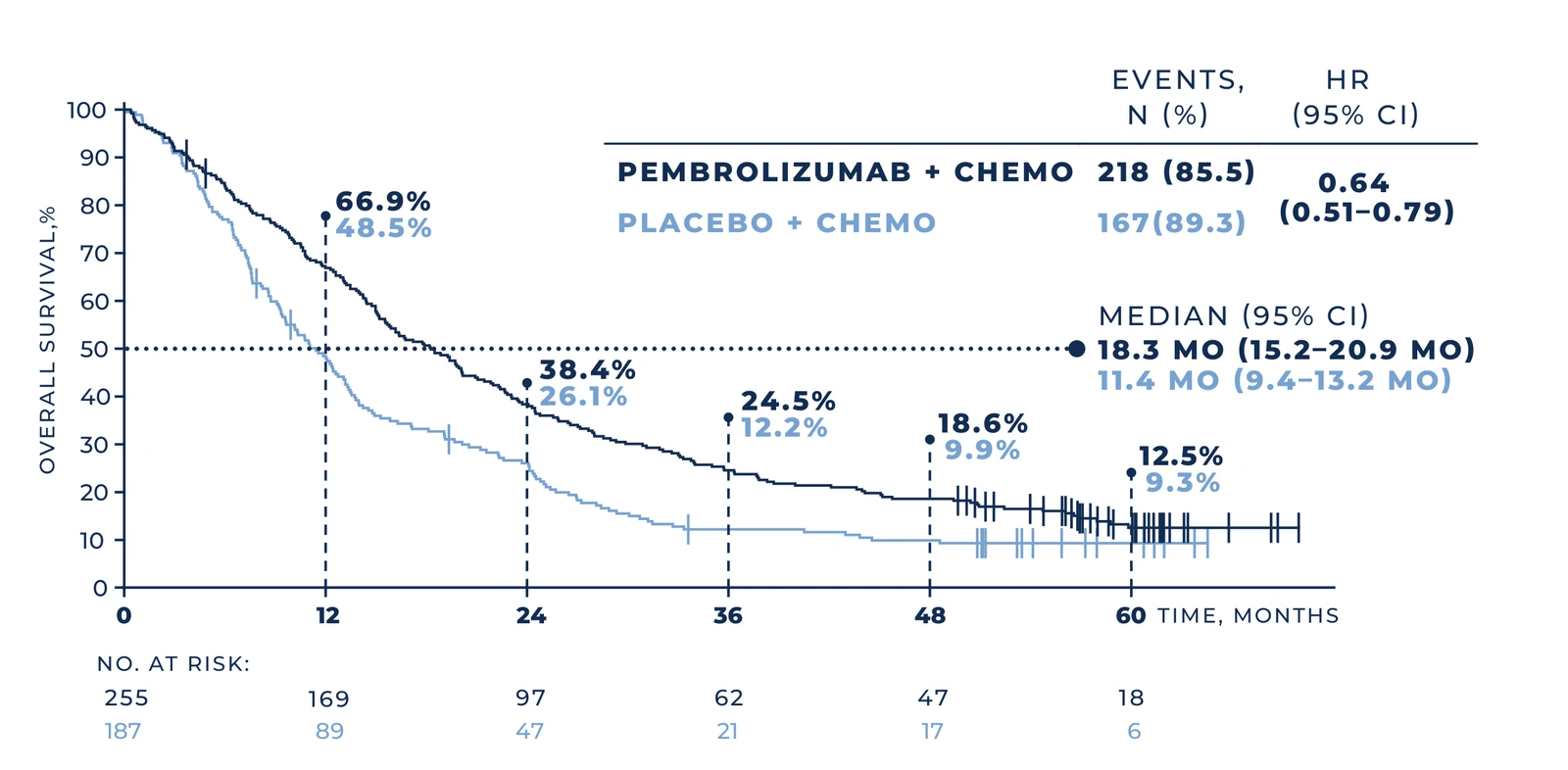
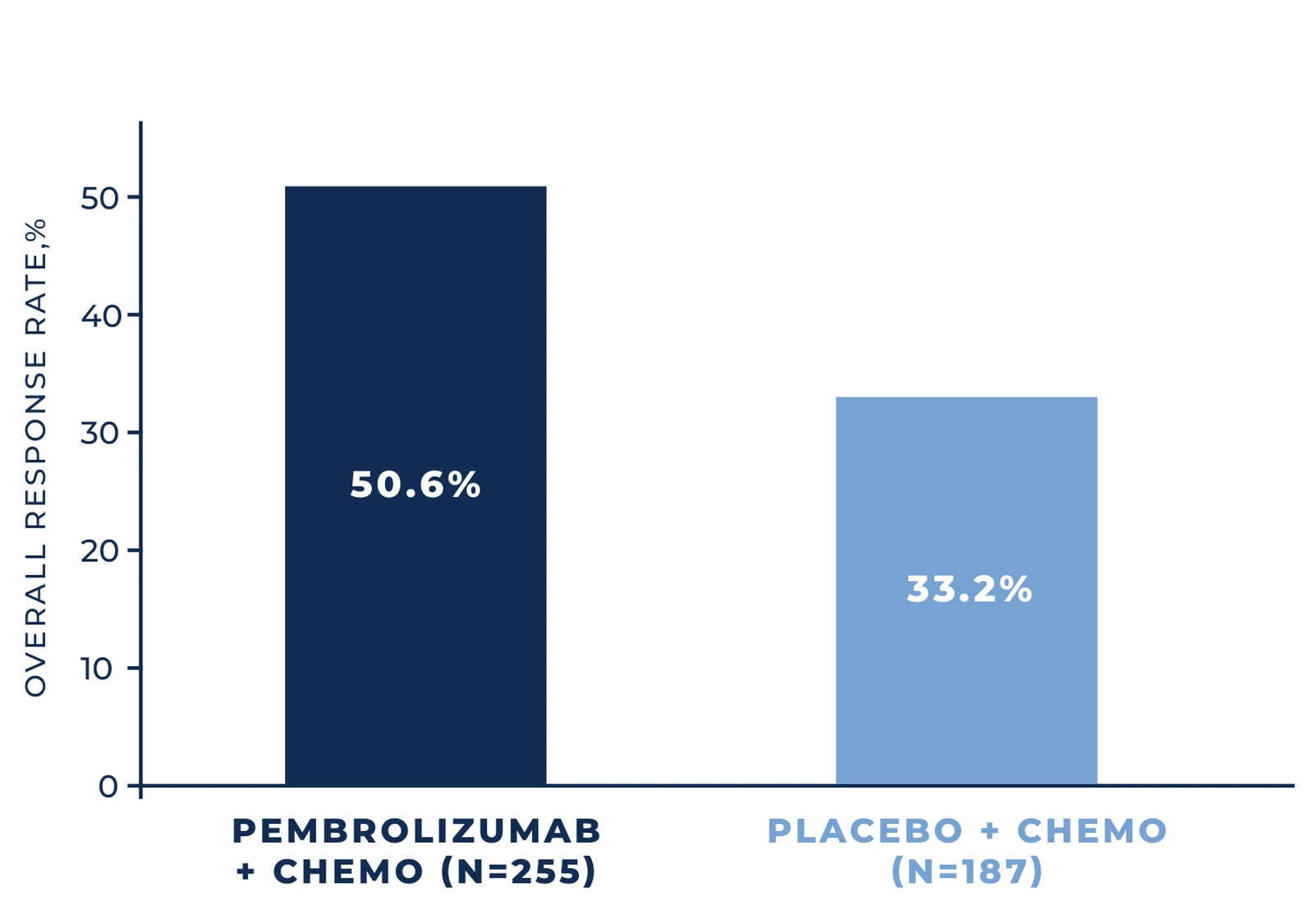
- In a pooled analysis of KEYNOTE-189 and KEYNOTE-407 restricted to TPS < 1%, with approximately five years of follow-up, median overall survival was 18.3 months with pembrolizumab plus chemotherapy versus 11.4 months with chemotherapy alone (hazard ratio 0.64), and the overall response rate was 50.6% versus 33.2%.
- Her practical corollary for daily practice: test biomarkers upfront, retest at progression, and keep second-line doors open by avoiding unnecessary toxicity.
Watch the full video interview with Prof. Curioni-Fontecedro →
A practice reshaped by chemo-immunotherapy
Since the advent of chemo-immunotherapy combinations, the treatment of advanced non–small cell lung cancer (NSCLC) has changed dramatically, driven by improvements in overall survival (OS) and overall response rates (ORR). This matters in daily practice: patients are usually highly symptomatic at first diagnosis of advanced disease, and the immediate priority is to reduce disease burden. Response rates have been significantly — and clinically meaningfully — improved by combining chemotherapy with immunotherapy.1,2 As Prof. Alessandra Curioni-Fontecedro from the Cantonal Hospital Fribourg (HFR) puts it: “In our daily practice we want patients, who are usually highly symptomatic at the first diagnosis, to have a reduction of disease burden. That is why we want to see responses.”
The corollary, in Prof. Curioni-Fontecedro’s view, is that as soon as lung cancer is diagnosed, patients should be evaluated for comorbidities that might affect treatment while, in parallel, reflex testing is performed to characterise the disease. She describes how, at HFR, this reflex testing includes not only immunohistochemistry for Programmed Death-Ligand 1 (PD-L1), but also next-generation sequencing (NGS) for every patient with NSCLC, in order to offer the optimal treatment option as early as possible.
The “tail of the curve” is now real in daily practice
In Prof. Curioni-Fontecedro’s experience, long-term survivors are no longer the exception in everyday oncology, and HFR has set out to document this systematically. She reports that the HFR NSCLC registry, curated by Dr. Danny Kupka, has collected more than 800 cases with roughly 100 data points per patient — a model, in her view, of how disciplined, structured follow-up can reveal what actually happens to patients in the practice setting. It was built to understand the local epidemiology — the features and needs of the patients who come to HFR — and that understanding has directly shaped which clinical trials HFR opens and which options it offers.
“When we see these overall survival curves — the famous ‘tail of the curve’ that we always hoped for as oncologists — we see it now, in daily practice,” says Prof. Curioni-Fontecedro. Because the registry began around five years ago, most of its patients received chemo-immunotherapy — and at HFR the benefit is even more pronounced than in the pivotal trials: “we see the tail of the curve performing even better than what we see in clinical trials.” Two local features stand out in her account: a very large population of smokers, which she says shapes the cancer subtypes and molecular profiles seen, and a notable proportion of patients with more than one cancer — which she attributes to both an ageing population and cumulative risk factors.
Addressing the clinical need in PD-L1–negative disease
Historically, PD-L1–negative disease (tumour proportion score; TPS < 1%) has been one of the greatest challenges in NSCLC: these tumours respond less to immunotherapy alone,3 and patients often present with symptomatic, advanced disease that demands rapid control. The clinical need concerns a large share of patients — around one third of all NSCLC cases — underscoring the importance of effective options for exactly this group.4,5 This, for Prof. Curioni-Fontecedro, is precisely where chemo-immunotherapy has changed the outlook, pairing the fast disease control of chemotherapy with the durability of immunotherapy. Responses, she notes, have been “significantly, and clinically significantly, improved by the combination of chemo and immunotherapy” — offering, in her view, a realistic prospect of durable long-term survival for many of these patients for the first time.
Clinical evidence: pembrolizumab plus chemotherapy
In the first-line setting, Prof. Curioni-Fontecedro’s practice at HFR follows the KEYNOTE trials — KEYNOTE-189 and KEYNOTE-4071,2,6 — “because we have long-term outcome data,5 which are really important and reflect what we see in our daily practice.”
The strongest evidence in PD-L1–negative disease comes from an exploratory pooled analysis of the KEYNOTE-189 (non-squamous) and KEYNOTE-407 (squamous) studies,1,2 including their Japan and China extension studies.5 It combined individual patient data from these randomised, double-blind trials, focusing on the subgroup with PD-L1 TPS < 1% (n = 255 for pembrolizumab plus chemotherapy; n = 187 for placebo plus chemotherapy), with approximately five years of follow-up.5
In this PD-L1–negative subgroup, median overall survival was 18.3 months with pembrolizumab plus chemotherapy versus 11.4 months with chemotherapy alone (hazard ratio 0.64; 95% CI 0.51–0.79), and the overall response rate was 50.6% versus 33.2% (Figures 1 and 2).5 These findings highlight that meaningful, durable clinical benefit can be achieved with chemo-immunotherapy even in the absence of PD-L1 expression.5
Preserving future treatment options
A central theme is the need to protect the whole patient journey, not only the first-line result. Anticipating that most patients will respond, her team prepares for what comes next — the maintenance phase and, potentially, progression and second-line treatment. Prof. Curioni-Fontecedro’s guiding principle is not to preclude the patient from later options by adding unnecessary toxicity.
“We should not preclude the patient from any possible treatment options afterwards by giving too many toxicities, or toxicities that might hamper these possibilities.”Prof. Alessandra Curioni-Fontecedro, Cantonal Hospital Fribourg (HFR)
For this reason, HFR uses mainly a combination with a single immunotherapy, rather than adding, for example, bevacizumab or a second immunotherapy on top. As Prof. Curioni-Fontecedro explains, this is “due to the possibility of different toxicities by combining or adding on top” — because “adding a new treatment might add new toxicities.” And with no direct head-to-head comparison, the added burden is unproven; in her words, “this does not allow us to say: should we really give more toxicity for a benefit? We do not know.” Given the mature long-term results, this single-immunotherapy combination is HFR’s internal standard.
Biomarker testing remains essential
For Prof. Curioni-Fontecedro, comprehensive biomarker testing at diagnosis is fundamental: PD-L1 by immunohistochemistry together with broad molecular profiling by NGS. Importantly, PD-L1 expression can change over the course of the disease.7 In Prof. Curioni-Fontecedro’s own clinical experience, PD-L1 measured before adjuvant treatment has differed from the expression seen when the tumour later recurred — consistent with published analyses reporting discordance in PD-L1 expression between primary and relapsed disease7 — and, in her view, a strong argument for retesting rather than relying on an old PD-L1 result from a tumour that has since relapsed. She adds that metastatic lesions are analysed selectively — for example, when it is unclear whether a lesion is a metastasis, or in a patient with respiratory disease.
At HFR, molecular testing is performed upfront and in full. Notably, although KRAS (Kirsten rat sarcoma virus oncogene homologue) is detected by this testing, a KRAS mutation — even a classical G12C — does not currently change first-line treatment outside of a clinical trial;8 testing for all mutations at the outset, she explains, simply ensures that no opportunity is missed.
Guidelines and the Swiss context
HFR follows mainly the ESMO guidelines,8 complemented by ASCO9 and NCCN,10 all of which are rich with treatment options. A practical caveat she raises: guidelines list every study and option but do not, by themselves, tell the clinician which regimen fits which patient — a decision that depends on comorbidities, co-medications, patient wishes and national drug availability. Two points recur in her own practice. First, she always checks when a guideline was last updated, because new data may not yet be incorporated. Second, she moves from the broad guideline to what is actually approved and available in the country; Switzerland, in her view, is fortunate in having access to most drugs, which is not universal.
One important clarification concerns oncogene-addicted disease: the first-line algorithm for non-oncogene-addicted NSCLC does not apply to patients with targetable alterations, and KRAS is not used as a targetable oncogenic aberration for first-line decisions today.8,10
Outlook: understanding the biology
Looking ahead, Prof. Curioni-Fontecedro returns to biology: the priorities are to understand how PD-L1 expression changes and whether that change is clinically relevant, and to map the mechanisms of resistance to immunotherapy — including in PD-L1–negative patients — so that better-matched combinations can be tested in the clinic. “We will look into the biology of this disease,” she says, “to understand who responds and who does not.”
Implications for today’s daily practice
Prof. Curioni-Fontecedro believes that, for clinicians treating PD-L1–negative metastatic NSCLC, the experience from HFR is consistent and practical. In her view it reinforces the durable survival outcomes seen in the KEYNOTE programme and — together with the pooled clinical-trial evidence5 — continues to support pembrolizumab plus chemotherapy as an important first-line option for these patients, offering both rapid disease control and the potential for durable long-term survival. Her corollary for everyday practice is clear: test biomarkers upfront, retest at progression, and keep second-line doors open by avoiding unnecessary toxicity — so that today’s first-line choice protects tomorrow’s options.
References
- Garassino MC, et al. Pembrolizumab plus pemetrexed and platinum in nonsquamous non–small-cell lung cancer: 5-year outcomes from the phase 3 KEYNOTE-189 study. J Clin Oncol. 2023;41(11):1992–1998.
- Novello S, et al. Pembrolizumab plus chemotherapy in squamous non–small-cell lung cancer: 5-year update of the phase III KEYNOTE-407 study. J Clin Oncol. 2023;41(11):1999–2006.
- Garon EB, et al. Pembrolizumab for the treatment of non–small-cell lung cancer. N Engl J Med. 2015;372(21):2018–2028.
- Dietel M, et al. Real-world prevalence of programmed death ligand 1 expression in locally advanced or metastatic non-small-cell lung cancer: the global, multicenter EXPRESS study. Lung Cancer. 2019;134:174–179.
- Gadgeel SM, et al. Pembrolizumab plus chemotherapy for metastatic NSCLC with programmed cell death ligand 1 tumor proportion score less than 1%: pooled analysis of outcomes after five years of follow-up. J Thorac Oncol. 2024;19(8):1228–1241.
- Keytruda (pembrolizumab). Swiss prescribing information (Fachinformation). MSD Merck Sharp & Dohme AG, Lucerne; April 2026. Available at www.swissmedicinfo-pro.ch. (Last accessed on 4th August 2026)
- Munari E, et al. PD-L1 expression comparison between primary and relapsed non-small cell lung carcinoma using whole sections and clone SP263. Oncotarget. 2018;9(54):30465–30471.
- Hendriks LE, et al. Non-oncogene-addicted metastatic non-small-cell lung cancer: ESMO Clinical Practice Guideline for diagnosis, treatment and follow-up. Ann Oncol. 2023;34(4):358–376.
- Reuss JE, et al. Therapy for stage IV non-small cell lung cancer without driver alterations: ASCO Living Guideline, version 2026.3.0. J Clin Oncol. 2026;44:e56–e88.
- NCCN Clinical Practice Guidelines in Oncology: Non-Small Cell Lung Cancer, version 4.2026. NCCN.org. Accessed June 2026.
Featuring Lung Summit faculty
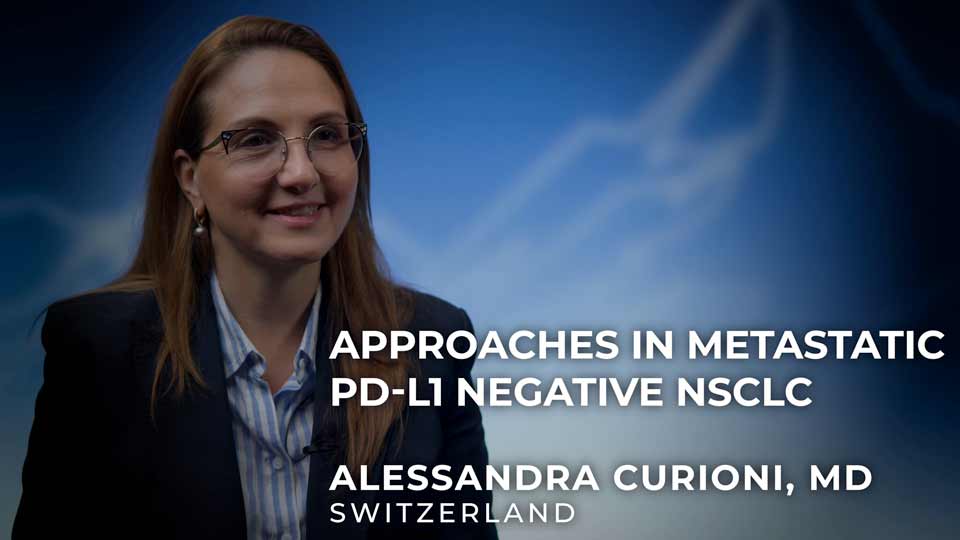
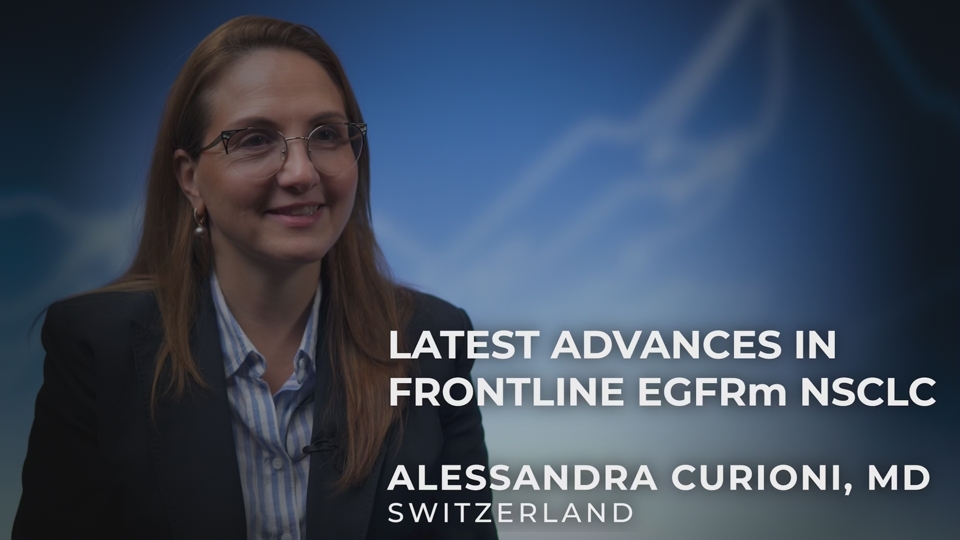
This interview was given by Lung Summit faculty member Prof. Alessandra Curioni-Fontecedro, Cantonal Hospital Fribourg (HFR), Switzerland. The full video interview is available on Lung Summit.
Article written by Tina Gascoigne, PhD. PEAK Medicals GmbH, Schützenstrasse 1, 8800 Thalwil, Switzerland. hello@peakmedicals.com