In brief
- The cross-sectional QUALICI study surveyed 234 durable responders to immune checkpoint inhibitors, 117 with advanced or metastatic NSCLC and 117 with melanoma, at 16 French hospitals.
- On the EQ-5D-5L, 62.0% of patients with NSCLC and 69.7% of those with melanoma reported no or slight problems on the five EQ-5D-5L dimensions.
- Moderate-to-severe fatigue was reported by 78.9% of patients with NSCLC and 95.3% of those with melanoma.
- Social difficulties were greater in NSCLC, with a mean Social Difficulties Inventory score of 10.4 against 5.9 in melanoma.
- Two-thirds of patients had discussed quality of life with health care professionals, but 22.2% felt unable to fully express their concerns.
Study at a glance
- Design: Multicentre, cross-sectional questionnaire study at 16 French hospitals
- Population: Adults at least two years from the start of an immune checkpoint inhibitor, with no subsequent cancer therapy, screened and randomly selected
- Cohort: 234 patients, 117 with NSCLC and 117 with melanoma
- Measures: EQ-5D-5L, Social Difficulties Inventory, Chalder Fatigue Scale and a care-experience questionnaire
- EQ-5D-5L visual analogue scale: Mean 67.0 (SD 19.3) in NSCLC and 74.8 (SD 19) in melanoma
- Moderate-to-severe fatigue: 78.9% in NSCLC, 95.3% in melanoma
- Social Difficulties Inventory: Mean 10.4 (SD 8.5) in NSCLC, 5.9 (SD 6.6) in melanoma
- Not reported: In the abstract, the checkpoint inhibitors received, the time since treatment began, whether patients were still on treatment, and P values for the comparisons between the two cancers
No or slight EQ-5D-5L problems in 62.0% with NSCLC and 69.7% with melanoma
The EQ-5D-5L asks about mobility, self-care, usual activities, pain or discomfort, and anxiety or depression, each on a five-level scale. The authors report that most patients in both groups described no or slight problems on these dimensions. The instrument allows a patient to report moderate or worse difficulty on one dimension while scoring well on the others.
Patients also rated their own health from 0 to 100 on the accompanying visual analogue scale. The mean score was 67.0 in the NSCLC group and 74.8 in the melanoma group. Scores were higher in younger patients and in those who were professionally active.
Moderate-to-severe fatigue in 78.9% with NSCLC and 95.3% with melanoma
Fatigue, measured on the Chalder Fatigue Scale, ran against the general picture from the EQ-5D-5L. Nearly four in five patients with lung cancer and almost all patients with melanoma scored in the moderate-to-severe range. The melanoma group therefore reported the higher mean health rating and the higher rate of fatigue at the same time.
Patients with moderate-to-severe problems on the EQ-5D-5L also reported poorer perceived general health, more fatigue and more social difficulties, in both cancer groups. Problems on one measure therefore tended to occur alongside problems on the others.
Social difficulty scores of 10.4 in lung cancer against 5.9 in melanoma
The Social Difficulties Inventory is a patient-completed questionnaire on the practical and social problems that follow a cancer diagnosis, with higher scores meaning more difficulty. The NSCLC group’s mean of 10.4 (SD 8.5) compared with 5.9 (SD 6.6) in melanoma, which the authors describe as more pronounced social difficulties in lung cancer. In both groups the standard deviation is close to the mean, so scores varied widely from patient to patient.
“Most ICI-DR patients reported satisfactory HRQoL but heterogeneity and communication gaps support the need for patient-centered survivorship care.”Girard et al., Immuno-Oncology Technology (2026)
22.2% unable to fully voice their concerns despite discussing quality of life
Two-thirds of patients had talked about quality of life with health care professionals. Even so, 22.2% said they felt unable to fully express their concerns, one of the communication gaps the authors cite in their conclusion. The abstract does not say what those concerns were or with which professionals they were raised.
The authors place the study in the context of a growing population of durable responders, as checkpoint inhibitors have changed outcomes in advanced melanoma and NSCLC. They note that the persistent quality-of-life problems these patients may face have been poorly documented, and QUALICI was designed to describe them, the factors linked to better scores, and patients’ expectations regarding their quality of life.
A single survey with no baseline or comparison group
QUALICI was cross-sectional, so each patient was assessed once. It cannot show whether fatigue or social difficulties began with cancer, with treatment or after it, or whether they are improving or worsening. The abstract also reports no comparison with the general population or with patients who did not respond, so the scores describe these responders without placing them against an external reference.
Eligible patients were screened and randomly selected to take part, which limits the chance that clinicians chose the patients they expected to do best. The sample of 117 per cancer type is modest, and all 16 centres were in France, where access to follow-up care may differ from other health systems.
Sources
- Immuno-Oncology Technology. Quality of life and care experience in durable responders to immune checkpoint inhibitors for advanced or metastatic NSCLC or melanoma (2026-09-17). doi.org
Featuring Lung Summit faculty
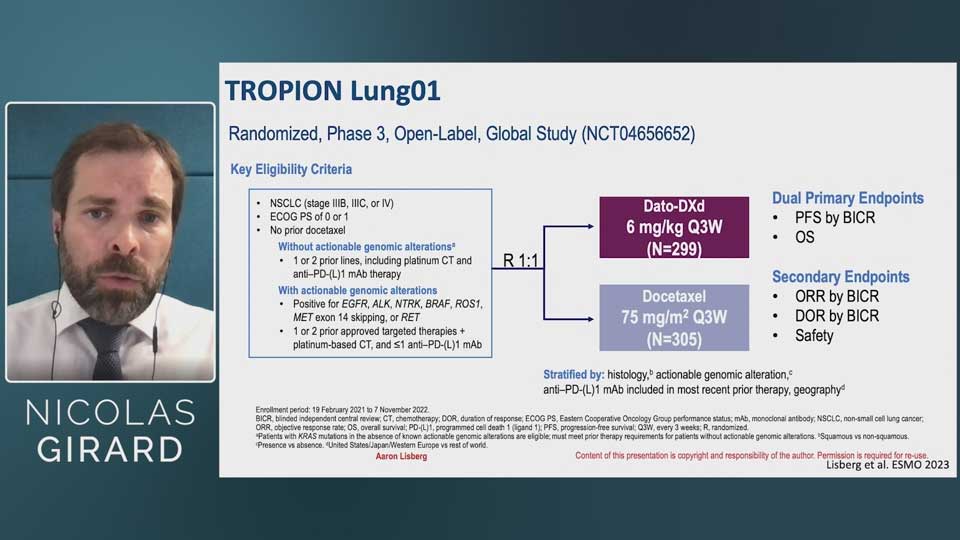
This study was co-authored by Lung Summit faculty Nicolas Girard.
This article was produced independently by the Lung Summit editorial team, without industry funding or input.