In brief
- At a minimum follow-up of 91.9 months, 19% of patients with tumour PD-L1 ≥1% were alive at seven years on nivolumab plus ipilimumab, against 10% on chemotherapy (HR 0.78).
- In tumour PD-L1 <1%, the seven-year OS rates were 14% with the combination and 4% with chemotherapy (HR 0.64).
- Among responders, 25% (PD-L1 ≥1%) and 20% (PD-L1 <1%) were still in response at seven years with nivolumab plus ipilimumab, against 3% in each chemotherapy group.
- Benefit was observed across most patient subgroups, including squamous and non-squamous histology and selected oncogenic driver mutations.
- No new safety signals were observed in this final analysis.
Study at a glance
- Trial: CheckMate 227 Part 1 (NCT02477826), randomised phase 3
- Population: adults with stage IV or recurrent NSCLC and no sensitising EGFR or ALK mutation
- Cohorts: PD-L1 ≥1% (n=1189) and PD-L1 <1% (n=550)
- Treatment: nivolumab plus ipilimumab against chemotherapy; nivolumab alone (PD-L1 ≥1% only) and nivolumab plus chemotherapy (PD-L1 <1% only) as further arms
- Follow-up: minimum 91.9 months
- Survival: 7-year OS 19% vs 10% in PD-L1 ≥1% (HR 0.78); 14% vs 4% in PD-L1 <1% (HR 0.64)
- Ongoing response at 7 years: 25% vs 3% (PD-L1 ≥1%); 20% vs 3% (PD-L1 <1%)
- Not reported: median OS, results for the nivolumab-alone and nivolumab-chemotherapy arms, adverse event rates
A hazard ratio of 0.78 in tumours expressing PD-L1
Among the 1189 patients whose tumours expressed PD-L1 on at least 1% of cells, the hazard ratio for death with nivolumab plus ipilimumab against chemotherapy was 0.78 (95% CI 0.67–0.91). At seven years, 19% of patients in the combination arm were alive, compared with 10% of those given chemotherapy.
These figures come from a randomised comparison with a minimum follow-up of 91.9 months, and the analysis is the trial’s final one. Patients in this cohort were randomised to one of three arms, and the abstract reports the combination against chemotherapy.
A lower hazard ratio, at lower absolute rates, in PD-L1 <1% disease
In the 550 patients with tumour PD-L1 below 1%, the hazard ratio was 0.64 (95% CI 0.51–0.79). Seven-year survival was 14% with nivolumab plus ipilimumab and 4% with chemotherapy.
Survival at seven years was lower in this cohort than in PD-L1 ≥1% disease in both arms, although the point estimate of the hazard ratio was lower; the abstract makes no formal comparison between the cohorts. The PD-L1 <1% cohort was also less than half the size of the PD-L1 ≥1% cohort.
One in four responders with PD-L1 ≥1% still responding at seven years
Duration of response was measured among patients who responded to treatment. With nivolumab plus ipilimumab, 25% of responders with PD-L1 ≥1% and 20% of responders with PD-L1 <1% remained in response at seven years, against 3% of chemotherapy responders in each cohort. The abstract does not give the response rates themselves, so the share of all randomised patients in long-term response cannot be calculated from it.
“This final analysis from CheckMate 227 confirms that nivolumab plus ipilimumab confers long-term, durable clinical benefit versus chemotherapy in patients with metastatic NSCLC across both the tumor PD-L1 ≥1% and PD-L1 <1% populations, reinforcing nivolumab plus ipilimumab as a first-line treatment option for these patients.”Reck et al., Journal of Thoracic Oncology (2026)
Benefit across histologies and selected driver mutations, with no new safety signals
The authors observed clinical benefit with nivolumab plus ipilimumab across most patient subgroups, including squamous and non-squamous NSCLC and tumours with selected oncogenic driver mutations. The abstract does not name the driver mutations or the subgroups that fell outside this pattern.
With a minimum follow-up of 91.9 months, no new safety signals were observed for the combination.
Sources
- Journal of Thoracic Oncology. Nivolumab Plus Ipilimumab as First-Line Treatment for Patients With Metastatic Non–Small Cell Lung Cancer: Final, 7.5-Year Outcomes From CheckMate 227 (2026-11-01). doi.org
Featuring Lung Summit faculty
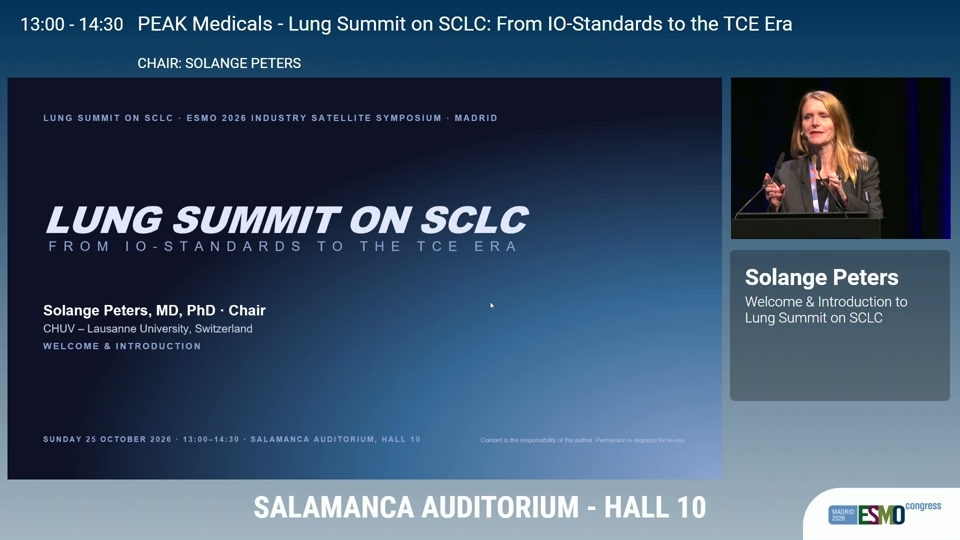
This study was co-authored by Lung Summit faculty Martin Reck, Hossein Borghaei and Solange Peters.
This article was produced independently by the Lung Summit editorial team, without industry funding or input.