SELECT FROM MENU

Therapy Areas
Drug Classes

       Therapy Areas

All Sessions

All Sessions

Resectable NSCLC

Resectable NSCLC

Advanced NSCLC

Advanced NSCLC

SCLC

SCLC

Biomarkers

Biomarkers

       Drug Classes

Targeted Therapies

Targeted Therapies

Immunotherapies

Immunotherapies

ADCs

ADCs

Advanced NSCLCOctober 29, 2026

Adding chemotherapy to pembrolizumab lengthened PFS in PD-L1-high advanced NSCLC in PERSEE

In patients with treatment-naive advanced non-small cell lung cancer (NSCLC) and high PD-L1 expression, adding platinum-based chemotherapy to pembrolizumab more than doubled median progression-free survival (PFS) in the multicentre phase III PERSEE trial (GFPC 01-2020, NCT04547504), reported by Descourt and colleagues in Annals of Oncology.
Share

In brief

  • PERSEE randomised 321 patients with untreated advanced NSCLC and PD-L1 expression of 50% or more to pembrolizumab alone or pembrolizumab with four cycles of platinum-based chemotherapy.
  • Median progression-free survival by blinded central review was 16.1 months with the combination and 6.9 months with pembrolizumab alone (hazard ratio 0.56; P<0.001).
  • Median overall survival was 50.2 months against 29.9 months, with a hazard ratio of 0.77 whose confidence interval crossed 1.
  • Grade 3 or higher treatment-related adverse events occurred in 54% of patients given the combination and 19% of those given monotherapy.
  • Grade 3 or higher immune-related adverse events occurred in 13% of patients in each group.

Study at a glance

  • Trial: PERSEE (GFPC 01-2020), multicentre, randomised 1:1, phase III
  • Population: 321 adults with untreated stage IV, or unresectable stage III NSCLC not amenable to definitive radiotherapy, PD-L1 50% or more
  • Treatment: pembrolizumab 200 mg every 3 weeks for up to 35 cycles (n=161), or the same with four cycles of induction platinum doublet (n=160)
  • Stratification: brain metastases and histologic subtype
  • Primary endpoint: PFS by blinded central review (RECIST v1.1)
  • Follow-up: median 38.7 months
  • PFS: 16.1 vs 6.9 months; HR 0.56; P<0.001
  • Overall survival: 50.2 vs 29.9 months; HR 0.77, not statistically significant
  • Safety: grade 3 or higher treatment-related adverse events 54% vs 19%

A head-to-head test of two accepted first-line options

For patients whose tumours carry no actionable oncogenic alteration and have PD-L1 expression of 50% or more, both pembrolizumab alone and pembrolizumab with chemotherapy are standard first-line choices. PERSEE was designed as a head-to-head randomised comparison of the two.

PERSEE assigned the chemotherapy by histology. Patients with non-squamous disease received cisplatin or carboplatin (AUC 5) with pemetrexed, followed by pembrolizumab and pemetrexed maintenance. Patients with squamous disease received carboplatin (AUC 6) with paclitaxel, followed by pembrolizumab maintenance.

Median PFS of 16.1 months with the combination, against 6.9 months

After a median follow-up of 38.7 months, the 160 patients given the combination had a 44% lower risk of progression or death than the 161 given pembrolizumab alone (hazard ratio 0.56). Progression was judged by blinded central review rather than by the treating investigators.

The trial met its primary endpoint. The abstract does not give response rates or duration of response, both of which were key secondary endpoints, and it reports no results by histology or by brain metastases at baseline, although randomisation was stratified on both.

An overall survival gap of 20 months that did not reach significance

Median overall survival was 50.2 months with the combination and 29.9 months with monotherapy. The hazard ratio of 0.77 had a 95% confidence interval of 0.56 to 1.05, so the trial cannot exclude the absence of a survival difference. Overall survival was a key secondary endpoint, and the abstract gives no figures for treatment received after progression in either arm.

“Among patients with treatment-naïve advanced NSCLC and high PD-L1 expression, the addition of platinum-based chemotherapy to pembrolizumab significantly prolonged PFS compared with pembrolizumab monotherapy.”Descourt et al., Annals of Oncology (2026)

Nearly three times the rate of severe treatment-related toxicity

Grade 3 or higher treatment-related adverse events occurred in 54% of the combination group and 19% of the monotherapy group. Grade 3 or higher immune-related adverse events were equally frequent, at 13% in each arm, so the difference between the groups lay in toxicity outside the immune-related category.

The PFS gain therefore came with more severe treatment-related toxicity, and the survival data do not show a statistically significant difference to set against it. Quality-of-life results, which would help weigh the two, are not in the abstract.

Sources

  1. Annals of Oncology. Pembrolizumab with or without platinum-based chemotherapy as first-line treatment in advanced NSCLC expressing PD-L1 ≥50%: The PERSEE randomized phase III trial (GFPC 01-2020) (2026-10-01). doi.org

Featuring Lung Summit faculty

This study was co-authored by Lung Summit faculty Maurice Pérol.

This article was produced independently by the Lung Summit editorial team, without industry funding or input.

i 3 On This Page

Share

       Continue With

Related Topics

Videos
Oliver Gautschi on EGFR+ NSCLC
Jul 20 2026
SPONSORED INTERVIEW
Advanced NSCLCTargeted Therapies

Advances in EGFR+ NSCLC: An Interview with Prof. Oliver Gautschi

Prof. Oliver Gautschi discusses recent advances in the treatment of EGFR-mutant non-small cell lung cancer in this on-demand expert interview.

O. Gautschi
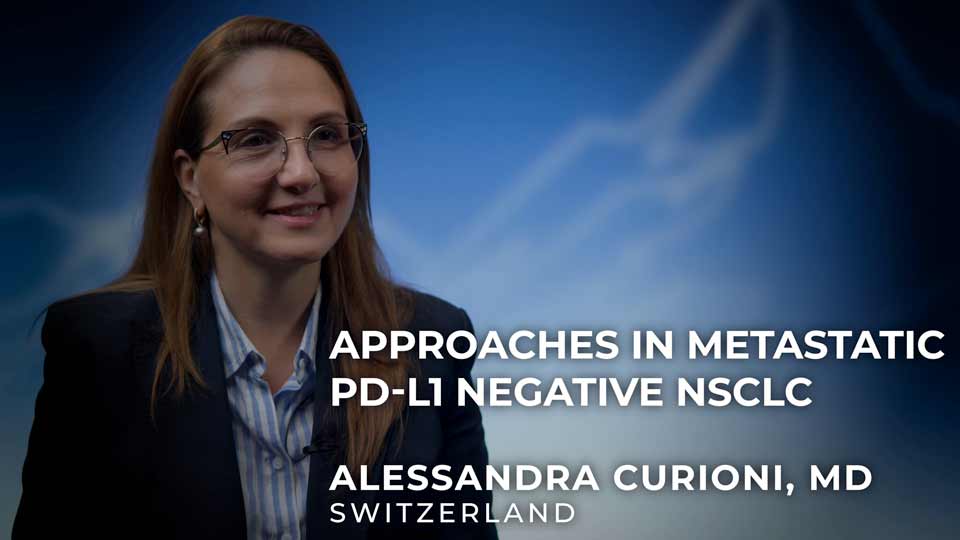
Prof. Alessandra Curioni-Fontecedro discussing approaches in metastatic PD-L1 negative NSCLC
May 04 2026
SPONSORED INTERVIEW
Advanced NSCLCImmunotherapies

Approaches in Metastatic PD-L1 Negative NSCLC: An Interview with Prof. Alessandra Curioni-Fontecedro

Prof. Alessandra Curioni-Fontecedro discusses treatment approaches in metastatic PD-L1 negative non-small cell lung cancer in this on-demand expert interview.

A. Curioni-Fontecedro
Lung Cancer Review by Solange Peters, Martin Reck, Charles Rudin
Dec 18 2025
VIRTUAL ROUNDTABLE
Advanced NSCLCSCLCADCs

2025 Approvals & Highlights

} 1 h 49 min

S. PetersC. RudinM. Reck
Sep 26 2025
ILCS 2025
Advanced NSCLC

Latest Options for Non-Oncogene Addicted Advanced NSCLC in Frontline and Beyond

} 32 min

A. Curioni-Fontecedro
Sep 26 2025
ILCS 2025
Immunotherapies

The Role of IO Added to Chemoradiation in Unresectable Stage III NSCLC

} 28 min

A. Filippi
Sep 26 2025
ILCS 2025
Immunotherapies

Tailoring IO in Res. NSCLC: Personalized Approaches for Improved Outcomes

} 36 min

P. Forde
Sep 26 2025
SPONSORED INTERVIEW
Advanced NSCLCTargeted Therapies

Latest Advances in Frontline EGFR+ NSCLC

} 14 min

A. Curioni-Fontecedro
Sep 26 2025
INDUSTRY SYMPOSIUM
Advanced NSCLCTargeted Therapies

Unlocking New Potentials in EGFR-Mutant NSCLC

} 30 min

A. Passaro
Sep 26 2025
ILCS 2025
Advanced NSCLC

Open Discussion on Patient Cases

} 22 min

Targeted Therapies by Oliver Gautschi, Jarushka Naidoo, Nicolas Girard
Jul 10 2025
VIRTUAL ROUNDTABLE
Advanced NSCLCTargeted Therapies

Targeted Therapies in NSCLC

} 1h 30 min

O. GautschiJ. NaidooN. Girard
IO in NSCLC by Solange Peters, Jordi Remon, Patrick Forde
Jun 25 2025
VIRTUAL ROUNDTABLE
Advanced NSCLCImmunotherapies

Immunotherapies in NSCLC

} 1h 47 min

P. FordeJ. RemonS. Peters
SCLC by Solange Peters, Giannis Mountzios, Jacob Sands
Jun 17 2025
VIRTUAL ROUNDTABLE
SCLCImmunotherapies

Small Cell Lung Cancer

} 1h 35 min

G. MountziosJ. SandsS. Peters
Girard ADCs
Oct 05 2024
INDUSTRY SYMPOSIUM
Advanced NSCLCADCs

Best Practices in Managing Adverse Events with ADCs in NSCLC

} 18 min

N. Girard
Patient Cases
Oct 04 2024
ILCS 2024
Advanced NSCLCResectable NSCLC

Patient Cases & Open Questions

} 32 min

Sandip Patel & Giannis Mountzios
Oct 04 2024
ILCS 2024
Advanced NSCLC

DEBATE: Balancing Efficacy, Toxicity, and Patient-Centered Care For IO Duration in NSCLC

} 33 min

G. MountziosS. Patel
Jordi Remon
Oct 04 2024
ILCS 2024
Immunotherapies

Tailoring IO in Resectable NSCLC: Personalized Approaches for Improved Outcomes

} 25 min

J. Remon
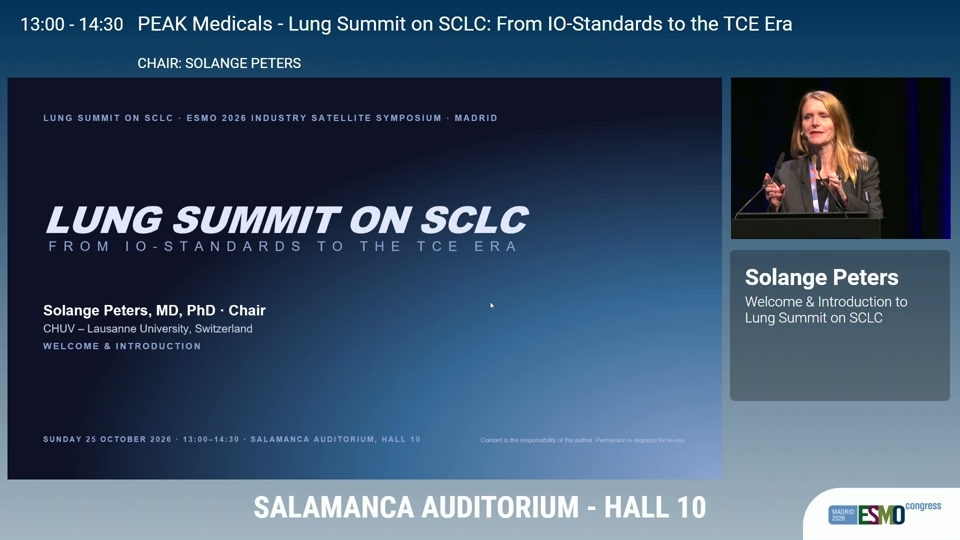
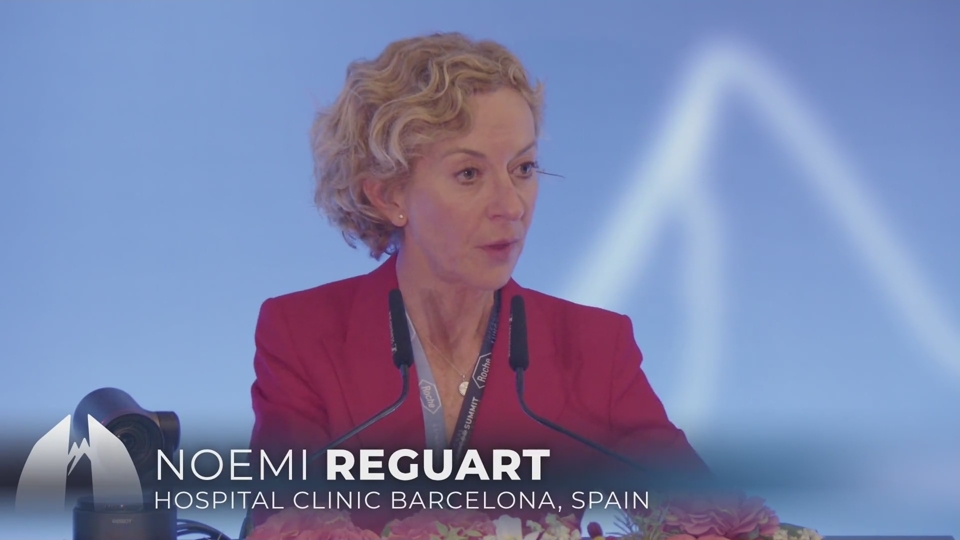
Oct 25 2026
ESMO 2026 SYMPOSIUM
SCLC

SCLC Symposium at ESMO 2026: From IO-Standards to the TCE Era

A symposium at ESMO Congress 2026 on small-cell lung cancer, from immunotherapy standards to the emerging era of DLL3 T-cell engagers. Recording to follow.

M. ReckS. PetersG. MountziosN. Reguart
Nov132026
ILCS 2026

The International Lung Cancer Summit 2026

Learn more about the event

S. PetersA. AddeoM. DasH. HorinouchiT. SequeiraC. LovlyD. PlanchardS. PatelA. CortelliniN. FrostG. MountziosA. Dingemans
Sep 26 2025
ILCS 2025
SCLC

Reshaping Approaches in SCLC with the Latest Advances in LS- and ES-Disease

} 34 min

R. Manochakian
Sep 26 2025
ILCS 2025
ADCs

The ADC Revolution in Lung Cancer: New Targets, New Opportunities

} 27 min

N. Reguart
Articles
Oct 27 2026
RESEARCH
SCLCImmunotherapies

Tarlatamab added to durvalumab maintenance extended OS in extensive-stage SCLC

J. SandsM. PérolA. Dingemans
Oct 26 2026
INDUSTRY NEWS
Advanced NSCLCResectable NSCLCTargeted Therapies

Divarasib extended OS over sotorasib or adagrasib in previously treated KRAS G12C-mutated NSCLC

Oct 23 2026
RESEARCH
SCLCImmunotherapies

KEYVIBE-008 tested vibostolimab coformulated with pembrolizumab plus chemotherapy in first-line ES-SCLC

J. SandsM. Reck
Oct 22 2026
RESEARCH
Advanced NSCLC

TP53 Y220C occurs in 0.7% of NSCLC and more often in EGFR-mutant tumours, in an ETOP study of 28,244 patients

R. StahelL. BubendorfL. HendriksS. PetersS. Finn
Oct 21 2026
SPONSORED
Advanced NSCLCImmunotherapies

The “tail of the curve” is real: long-term survival in PD-L1–negative metastatic NSCLC

A. Curioni-Fontecedro
Oct 21 2026
RESEARCH
Advanced NSCLCBiomarkersResectable NSCLC

ctDNA on immunotherapy is prognostic across NSCLC stages, but ctDNA-guided treatment remains investigational

U. Malapelle
Oct 19 2026
RESEARCH
Advanced NSCLCImmunotherapies

Nivolumab plus ipilimumab in 545 Japanese patients with metastatic NSCLC: the LIGHT-NING 2.5-year update

H. Horinouchi
Oct 18 2026
RESEARCH
Advanced NSCLCTargeted Therapies

First-line firmonertinib produced responses in 68% of patients with EGFR PACC-mutant NSCLC at 240 mg

X. LeD. PlanchardM. Pérol
Oct 16 2026
RESEARCH
Advanced NSCLCTargeted Therapies

Platinum-pemetrexed after selective RET inhibitor failure gave a median real-world PFS of 6.1 months

A. CallesJ. RemonA. CortelliniD. PlanchardB. Ricciuti
Oct 16 2026
RESEARCH
Advanced NSCLC

Fixation protocol determined immunocytochemistry performance on lung cancer cytology slides in an IASLC study

L. Bubendorf
Oct 14 2026
RESEARCH
Advanced NSCLCTargeted Therapies

Durable responders to immunotherapy for NSCLC or melanoma mostly reported good health, but frequent fatigue

N. Girard
Oct 08 2026
RESEARCH
Advanced NSCLCTargeted Therapies

Amivantamab, lazertinib and bevacizumab gave a 33% response rate after osimertinib in AMAZE-lung

R. StahelM. PérolA. AddeoS. Peters
Oct 06 2026
RESEARCH
Advanced NSCLCImmunotherapies

Two-thirds of patients with PD-L1-high NSCLC received first-line immunotherapy alone in a real-world survey

D. Rodríguez-Abreu
Alfredo Addeo
Oct 05 2026
RESEARCH
Advanced NSCLCTargeted Therapies

A JCO review sets PACC mutations and exon 20 insertions apart from classical EGFR mutations in NSCLC

A. AddeoX. Le
Oct 05 2026
RESEARCH
SCLCImmunotherapies

Second-line therapy in ES-SCLC gave a median OS of 7.1 months in the Austrian LALUCA registry

M. Hochmair
Nikolaj Frost
Oct 04 2026
RESEARCH
Advanced NSCLCSCLCTargeted Therapies

Checkpoint inhibitors were associated with longer survival in NSCLC after allogeneic stem cell transplantation

N. FrostM. ReckA. Cortellini
Oct 04 2026
RESEARCH
SCLCImmunotherapies

Longer OS in Asian than non-Asian patients given atezolizumab plus chemotherapy for extensive-stage SCLC

S. LiuM. ReckC. Rudin
Oct 03 2026
RESEARCH
Advanced NSCLCResectable NSCLCTargeted Therapies

AI-extracted records describe stage I–III NSCLC care at four Spanish hospitals before immunotherapy

A. Calles
Oct 03 2026
RESEARCH
Advanced NSCLCTargeted Therapies

KRAS inhibitors in NSCLC: modest survival gains, inevitable resistance and combinations in early trials

V. Noronha
Oct 02 2026
RESEARCH
Advanced NSCLCTargeted Therapies

Sutetinib produced responses in 71% of patients with uncommon EGFR mutations in a phase IIb trial

X. Le